


Edition #42 of Implications.
This edition explores forecasts and implications around: (1) the age where we remember everything, (2) what the coming waves of agentic commerce will bring, (3) the moat of change management, and (4) some surprises at the end, as always.
If you’re new: This ~monthly analysis is written for founders + investors I work with, colleagues, and a select group of subscribers. I aim for quality, density, and provocation vs. frequency and trendiness. We don’t cover news; we explore the implications of what’s happening. My goal, often during cross-country flights writing like a mad man, is to ignite discussion, socialize edges that may someday become the center, and help all of us connect dots.
If you missed the big annual analysis or more recent editions of Implications, check out recent analysis and archives here. A few recommendations based on reader engagement:
Originality is the primary ingredient of timeless creations and will become ever more valuable. People forget this all the time when the see the capabilities of AI models “creating stuff.” Let us never forget when valuing the premium of originality: Remaking a masterpiece isn’t hard. Making a masterpiece is hard.
Revenue per employee: The future metric? We’re moving from the time when you bragged about how big your company or division was to bragging about how small it is. A funny thing happens when the ROI (return on investment) of a person goes up: we start deploying MORE people — BUT only in ways that sustain or increase the ROI. Rather than larger organizations within a company, you’ll have MORE smaller organizations. My bet is that companies will deploy more people NOT to scale their existing products and services, but rather to launch new products and services.
The ability to create applications to solve problems will extend well beyond the “software developer,” further driving the abundance of apps and code and the need for the services that enable them to function. What are the other implications of SO MUCH MORE CODE?
Alright, onto Edition #42…
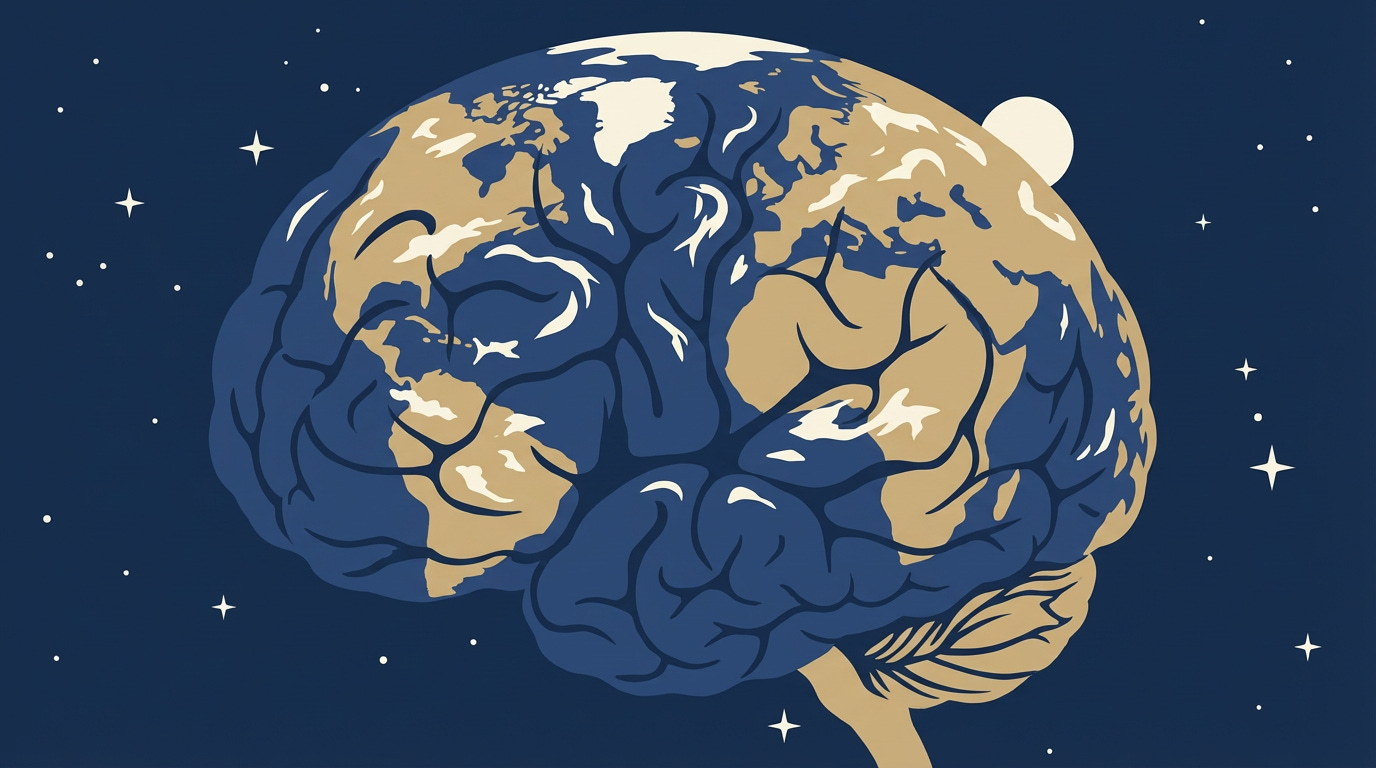
What are the Implications of Remembering Everything?
We humans are designed to forget. Continuously replaying the details of every fight, fear, and trauma would undoubtedly cripple life’s requirement to let go, learn from mistakes, give and get second chances, and expand our minds beyond the confines of the past. Similarly, our malleable memory allows us to tell ourselves the stories we need to hear. We survive and strive by not being tethered to an objective play-by-play of the past, but rather annotating and rationalizing our memories to mentally prepare ourselves for the future.
Our malleable memory is a feature, not a bug.
But this convenient constraint will soon become a choice rather than a natural imposition. With upcoming persistent ambient devices, AI summarization, and new recall technologies in development, we are entering an era where we can – if we want – remember everything. In edition 38, we explored the implications of “summarized living,” where a set of new intelligent summarization devices will “analyze our conversations and create a new form of memory that is private, respects the privacy of others we meet, and isn’t a word-for-word transcript, but rather serves as an extension of your brain.” As these new capabilities come online, we must consider the implications of boundless and persistent memory.
The new digital addiction will be living in the past. We all have moments from our past that we long to revisit. There’s a fantastic BLACK MIRROR episode from the first season about a world in which people have memory chips implanted in their heads that capture everything. The novelty is clear during one scene where a group of couples are at a dinner party taking turns replaying funny moments and stories on a big screen for their friends to enjoy. The danger is also clear as one couple becomes helplessly unable to repair their marriage after an incident of infidelity, especially because the footage can be infinitely replayed. While extreme and sci-fi, this portrayal of persistent memory seemed eerily accurate. Many of us already have shared albums of family photos with our loved ones and will, on occasion, spend time just flipping through the past and getting lost reliving earlier parts of our lives. Imagine what happens when these memories are immersive video and automatically captured and curated by our ambient devices. How tempting will it be to jump back into our past? To revisit a past era of life or an old relationship? Will we simply be reliving the joys or will we be perseverating about our regrets? How many of our future minutes will be spent reliving those in the past? What form of dividends from our upgraded memory will be net positive for our lives?
Memory deletion & augmentation as a service. I expect new cultural practices to emerge, like deleting the digital artifacts of certain periods of life as you evolve. Some people already cleanse their Instagrams after a relationship. Will new AI tools emerge that precisely remove from your store of data memories associated with trauma or past romantic partners? Already, we see ephemeral social products like Snapchat, favored by teenagers, that is designed to help people forget by making your content disappear by default. Will new social products emerge that help you capture and enjoy moments in life without having to remember them forever? What about AI tools that change our digital memories to be more favorable? After all, we already tell ourselves stories about our own pasts as a coping mechanism. I wonder whether we will use new technology to edit and annotate our ever-persistent memory?
Fact vs. historical fiction and consumer products for the era of persistent memory. The beauty of historical fiction is how stories anchored in fact can still be embellished, edited, and annotated. If we’re honest with ourselves, the best life stories are historical fiction (the fish in my father’s fly fishing stories get bigger every year he tells the story). Many of us are creative when we’re “recalling” our past. We are all on a hero’s journey of sorts and few of us want the facts to ruin a great story. And for some of us, a completely accurate memory of our childhood is painful. It’s better for us to write our own story with the agency to escape our actual past and upbringing. For this reason, I see the most successful consumer use-cases of memory technology being those that make our past feel more interesting. What is the equivalent of the “Instagram filter” for revisiting our memories? Perhaps we’ll want the next generation of consumer media tools to “improve” our past for us — to construct a compelling story composed of remnants of our lives that serve to inspire, commemorate, and embolden us? We’ll share these delicately edited AI memories with others, but there’s a good chance that over time they’ll influence our already malleable biological memories.
Who inherits our memories? In the era of summarized living and the ubiquitous capture and curation of the moments that matter, what happens to our memories when we are gone? Is it healthy for our children to be able to visit our recollections, reliving our own strengths and weaknesses as parents, long past our demise? I would argue that humanity, for 300,000+ years, has benefited from new generations feeling independent from those who came before them. There is no greater forcing function for independence and empowerment than the death of the previous generation. So in a world where our memory and so much of our persona and life experience can persist immortally, should we proactively delete ourselves, beyond a basic set of commemorative elements, when the time comes? What do we want to pass on to the next generation and what should die with us?
The more you remember, the more you will feel you have lived. I can’t vividly remember the details of more than a couple beach vacations, because they all blend together. But I vividly remember a night out in Tokyo at a tiny bar with my friend Joe, the first time I skinned up a mountain in Colorado, the longest run I ever took in the rolling hills of Tuscany, and getting lost in the streets of Kyoto with my daughter. The experiences I remember most are those that had texture — some sort of surprise or hardship that implanted them in my brain. These experiences create “core memories” that remain distinct and persistent, no technology required. My thesis on the future of humanity is that we will optimize for more of the experiences we’ll never forget. We will seek activities with texture to create memories that grip. And when we look back, the more of these textured memories we have, the longer we will feel we have lived. In previous editions of IMPLICATIONS we have discussed the difference between lifespan, health-span (your healthy span of life), and joy-span (the length of life you’ve actually enjoyed). But I’ll add a new one: lived-span, the life you feel you have lived. Our ability to recall memories, combined with the agency we take to create those that we will never forget, will help us reflect on the lives we truly lived.
The 3 waves of agentic commerce & open questions
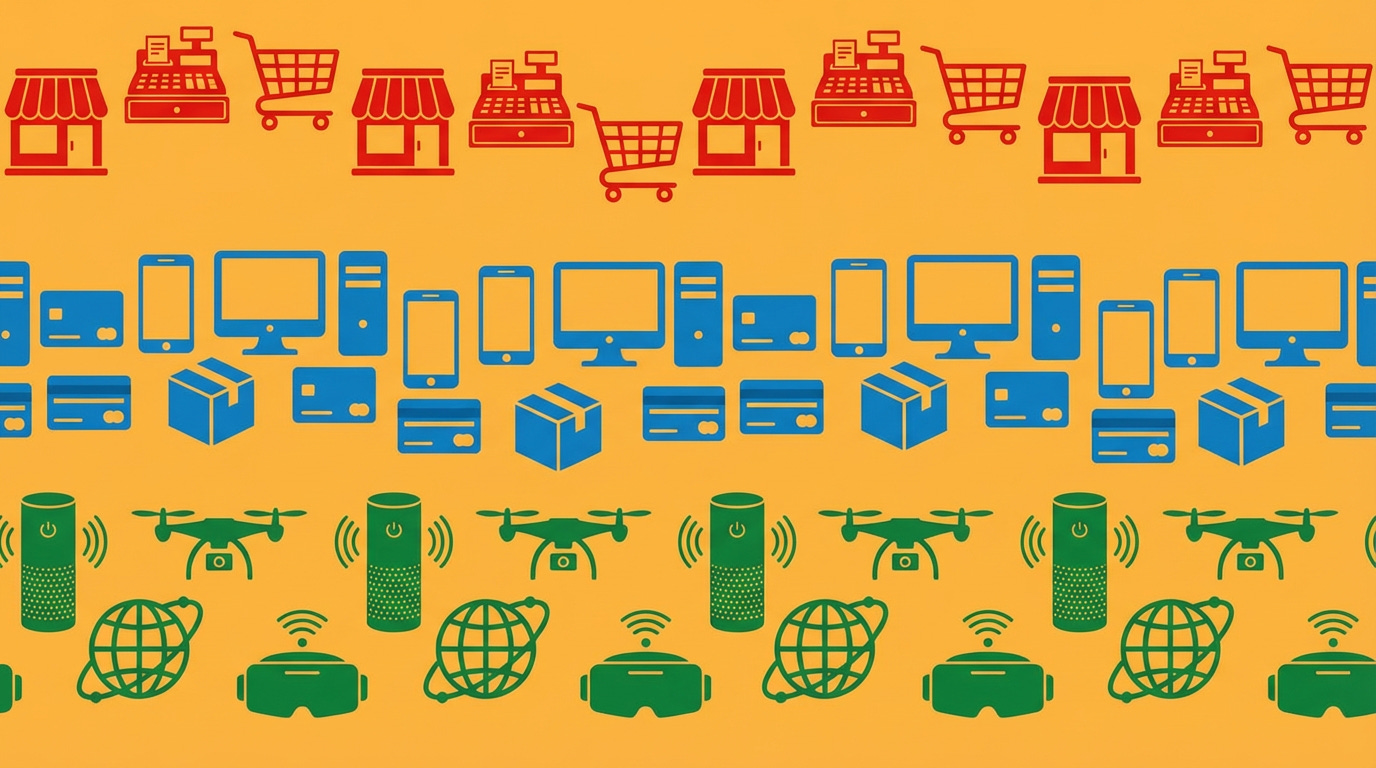
We’ve discussed outlooks for the future of commerce in previous editions of IMPLICATIONS, but the specific impact of AI is starting to become more clear. I see three waves of agentic commerce ahead of us:
WAVE 1: Integrated & reactive: This first wave is upon us now, as integrated shopping suggestions surface in our chats and queries within LLMs such as ChatGPT and Gemini. Integrations into AI chat experiences will likely leverage the Universal Commerce Protocol (UCP), a relatively new open standard co-developed by Shopify and Google. This protocol was created to enable quick integrations between any retailer or brand and the myriad of new AI-enabled shopping experiences emerging. This first wave is “reactive” in the sense that it relies on what we ask for. It faces the headwinds of habit because we’re simply not accustomed to shopping within a chat-based experience.
WAVE 2: Integrated & proactive: This second wave of integrations will (1) start the conversation as opposed to always responding, and (2) be informed by our data and past activity as opposed to responding to our needs and queries. For instance, you’ll be prompted to restock household products before you know you need them. When you start planning a vacation, you’ll start getting proactive suggestions for experiences to book on Airbnb or where to buy luggage or supplies, even though you didn’t ask for them. Given the growing context windows of major models and their deepening knowledge of our plans and history, these suggestions can become quite powerful. Behind the scenes of our day-to-day engagement with AI, our agents will be window-shopping for us - exploring things that might add to our lives, even when we didn’t have anything particular in mind that we needed.
WAVE 3: Autonomous: In a few years, smart sensors and ambient listening will automate commerce on our behalf – and some of us will authorize agents to pull the trigger on purchases autonomously. As you begin to trust the super intelligent systems that run your home, car, kitchen and refrigerator, and other parts of your routine, you’ll likely turn on “Auto Replenish” and “Auto Cart Creation” modes that use AI to restock your life and suggest other purchases proactively and autonomously. Your personal agents will be your representatives in this new era of commerce. In such a world, brands will be competing for favor from agents as opposed to humans. This will be interesting to watch.
A few big questions emerge as we think about the implications of agentic commerce:
Agents will select the stack: The rise of WOA (word of agent) marketing. Watching my teams and friends adopt Claude Code, it is becoming increasingly clear that product stack decisions — like using assorted tools in the AI-native stack like Supabase, Railway, Modal, and Macroscope, among others — are being proposed by Claude (and increasingly set up by Claude!). We’re going from a world where “word of mouth” marketing in the developer community is being replaced by “word of agent” marketing. To prepare, companies need to launch MCPs (the APIs of the model world) and other agent-friendly gateways to become the preferred option for agents. Dynamics in the market of software developers are often a precursor to other markets and I can’t help but wonder what it will mean for enterprise and consumer commerce when agent-driven recommendations become the default in these areas as well.
Will brands matter more or less? There is a good argument that as AI gets to know us better (perhaps better than we know ourselves), we will start to take AI’s suggestions by default. If it knows you are price-conscious, allergic to rubber, and have an affinity towards certain brands, the suggestions will become so informed that you’ll just start taking them without much second guessing. In such a world, brand matters less. However, as the interface for commerce starts to commoditize the choices we are offered, we may respond by seeking the brand that conjures up trust alongside others forms of feeling. Brands that either (1) build trust in their category or (2) serve as a flex for something consumers seek - like taste or some other attribute, will thrive in such a world.
Will prices be generalized or personalized (and perhaps discriminatory)? As we’ve discussed before, pricing is likely to become personalized based on our loyalty, preferences, and willingness to pay. Imagine special offers extended to customers based on, among other ideas, their taste, influence on social platforms, and their viral co-efficient (i.e. their willingness to share information about their purchase in ways that yields other customers, a measure that could certainly be determined from past purchases in the age of AI). AI-driven pricing is a fascinating and somewhat disconcerting phenomenon about to gain new dimensions and go mainstream.
Can agents negotiate on our behalf? On the topic of pricing, I definitely see a world where your commerce agent(s) will inform multiple merchants of your intention to purchase something, then allow those merchants to bid for your business. In the third “autonomous” wave of agentic commerce, I suspect this will become instant and commonplace.
Goodbye intermediaries: I suspect intermediary brokers of all kinds, like travel agents, brokers across real estate and insurance, and any other person who thrives by shouldering the process of diligence or negotiation, will be replaced. Recent reports and outlooks on commerce have all made the case that we have long overestimated the value of human relationships and endured unnecessary amounts of friction and fees in exchange for a human face to transact with. I suspect that our trusted agents will kick off a massive disruption of the intermediation layer that has been a part of so many markets for hundreds of years.
Will social recommendations matter more or less? I’ve always been fascinated by how likely we are, as humans, to trust the testimonial of one person we know over the average ratings from thousands of strangers. For some reason, social signal carries tremendous weight despite the readily available consensus view on purchase decisions. As a result, I think some brands will start to capitalize on the social signals that drive commerce decisions within these next-generation interfaces, along the lines of “Your friends recommend X.” I’ve explored this over the years in IMPLICATIONS and a previous startup I advised called Prefer (which didn’t succeed). To enable this era, products like ChatGPT and Claude will need to capture a social graph, whether via Contact Sync or via partnership. It is surprising to me that no major LLM yet (other than Meta) has a comprehensive social graph of its users. When your buying agent is suggesting — or persuading you to make —a purchase, it would be pretty powerful to surface recommendations and vouches from your friends.
We will favor scarce and human-crafted versions of everything in a world of automation. The wild card of commerce is consumer preferences, which have never been perfectly rational and are as much about our identity as they are about the utility we seek in buying something. My theory of abundance is that when anything becomes ubiquitous - whether content or anything else – it drives the human desire for scarcity, craft, and meaning. As shoes are commoditized, we buy higher-end shoes, etc. Perhaps we’ll see more limited editions, more artist-personalized versions of apparel, more stories behind the objects we seek, and more creative mechanisms that require passing through some form of “gate” (taking a quiz, seeing a film, traveling to a destination?) to buy something that isn’t available to the public?
The ultimate moat of the AI era is a lack of change management
When the game is changed - new platform-shifting technology emerges, the playbook for marketing in your industry transforms, or modern organizational models and leadership practices evolve for a new era - the wisdom is surprisingly evenly distributed. People are more networked than ever before, traditional execs follow the startup heroes on social, journalists tout and merchandise the breakthroughs, and consultants capitalize on knowledge arbitrage in moments like this. However, the gears of execution within actual hierarchical structures of leadership are slow. Change management is human rewiring, not technical upgrading. It is so much easier to build something new than change something old. Change management never happens naturally when you adopt new tech and practices. On the contrary, the ancestral lizard brains in all of us recoil from change by default. As a result, teams without the burden of change management gain the most advantage during generational platform shifts. At a larger and established company, the only way to transcend this outcome is the willingness and might to hack the organization from the top down - the proverbial “founder mode” as Brian Chesky coined it. Transplants of strategy, mission, and practice are just that: transplants. The healthier the organization, the more they require blunting the immune system through a painfully clear narrative, hacked reward systems, a collapsed talent stack (key people playing more than one role) and relentless execution.
Ideas, Missives & Mentions
Finally, here’s a set of ideas and worthwhile mentions (and stuff I want to keep out of web-scraper reach) intended for those I work with (free for founders in my portfolio, and colleagues…ping me!) and a smaller group of subscribers. We’ll cover a few things that caught my eye and have stayed on my mind as an investor, technologist, and product leader (including a thought on business transitions with a bold idea for my friends at Adobe, the team structure of tomorrow (and how I am approaching building a team today), thoughts on credit within teams, and a few other insights on my mind). Subscription contributions go to non-profit organizations I support including COOP Careers and the Museum of Modern Art. Thanks again for following along, and to those who have reached out with ideas and feedback.
Recent observations and things I am thinking about…
