


Edition #48 of Implications.
This edition explores forecasts and implications around: (1) why “story” is commanding more brand premium, (2) the hidden costs of outsourcing our thinking, (3) the new “classics” in school, (4) concerning ways governments and law enforcement are liable to use agents, (5) a plea to be more delusional, and (6) some surprises at the end, as always.
If you’re new, here’s the rundown on what to expect. This ~monthly analysis is written for founders + investors I work with, colleagues, and ~42,000 subscribers. I aim for quality, density, and provocation vs. frequency and trendiness. We don’t cover news; we explore the implications of what’s happening. My goal is to ignite discussion, socialize edges that may someday become the center, and help all of us connect dots.
Check out recent analysis and IMPLICATIONS editions here (each is exhaustingly crafted, often times at 30,000 feet). A few recommendations:
2026 is proving to be the year when consumer AI is finally figuring itself out. Here are 10 realizations for product leaders and builders as this all unfolds.
“Favored agent” status is probably one of the biggest opportunities (and necessities) in the growing agent product landscape. What are the implications of agents that get better access and a pass to skip the line?
Our malleable memory is a feature, not a bug. But this convenient constraint will soon become a choice rather than a natural imposition as we are enter an era where we can remember everything.
Rooted Narratives Are a Moat
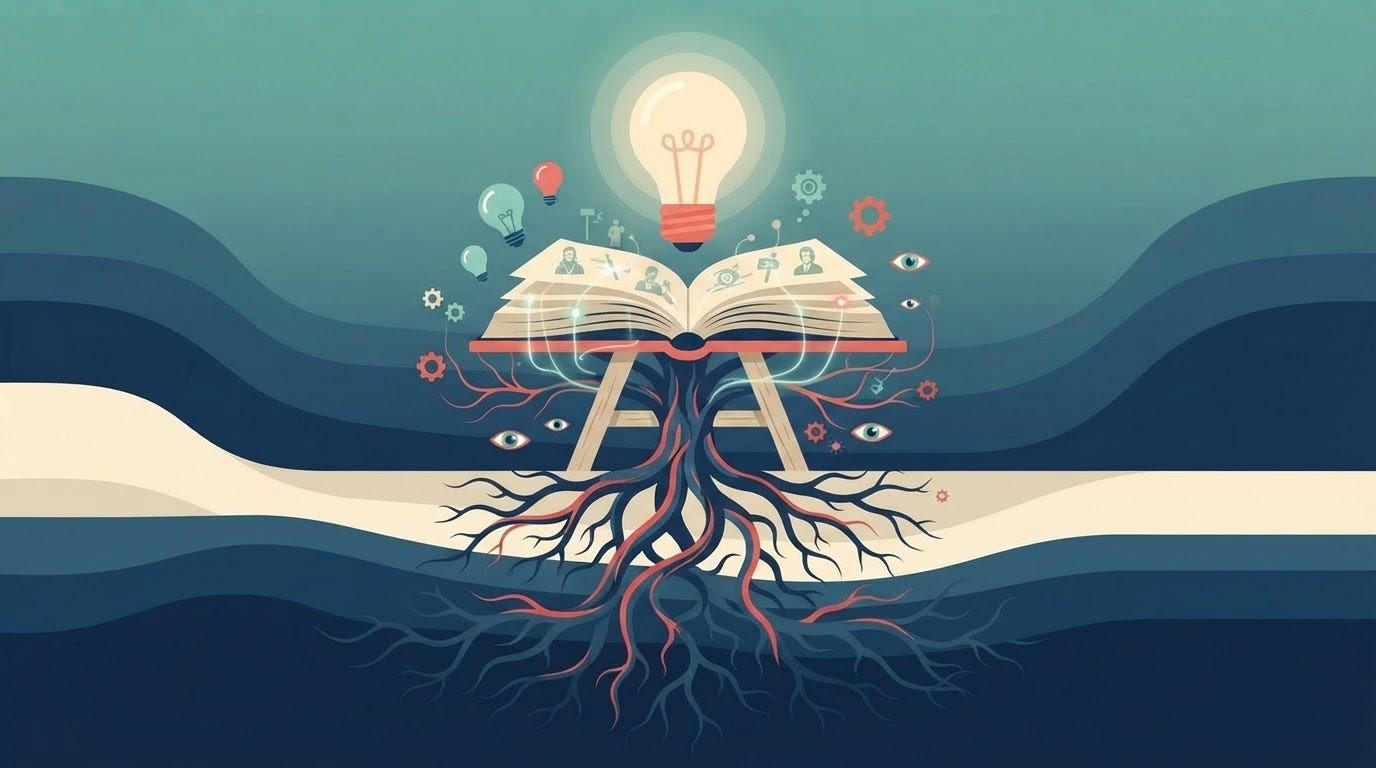
In past editions of IMPLICATIONS we have explored whether brand becomes more or less important as agentic commerce decides what is best for us. One of the most important realizations for anyone selling anything today is the importance of a time-tested story. As algorithms program our attention, as agents suggest what to buy, and as generative tools commoditize content creation, we will care MORE THAN EVER about the story behind a product, digital or physical. We will want to understand the scarce threads of origin. We will want to see the personalities. We will want to feel the hours and sweat endured to appreciate the challenge. A “story” that can only happen over time (or what i’ve come to call a “rooted narrative”) binds us to a product. The longer a story has developed, the more “moat” there is around that story. Such stories cannot be generated. Hermes started as a horse saddle company, Brunello Cucinelli made cashmere sweaters for many years, Ralph Lauren began making only ties — and then all of these brands incrementally and thoughtfully extended their “brand story” over time to build names that command a premium — a premium that transcends the truly commoditized space of clothing. Today, as literally anything digital can be conjured up (and soon anything physical as well, given the rise of vibe manufacturing), a product’s narrative will increasingly become its moat. Implications? We can expect more “grafting” of rooted narratives in one industry to new products in others (as we’ve seen with old construction brands like Caterpillar getting into fashion, etc). We can expect more persona-led growth in the form of individual CEOs and founders and creators of all kinds operating out front, actively engaging in social media and grafting their own story onto their company and product. People with authentic stories are the ultimate source for rooted narratives. After all, talent cannot be generated. We can expect iconic brands and truly original creators to command a greater premium, and fast-emerging brands to consider their core story as their greatest asset. And we can expect marketing and marketplaces to start featuring the story up front. For example, in an era of AI-generated music, we can expect the audience’s connection with the creator’s story to matter more than ever — and Spotify (and Suno!?) to start sharing the creator’s story front and center. If the story is the product, film, book, or show we see, the rooted narrative is the iceberg underneath.
The Hidden Costs of Cognitive Offloading
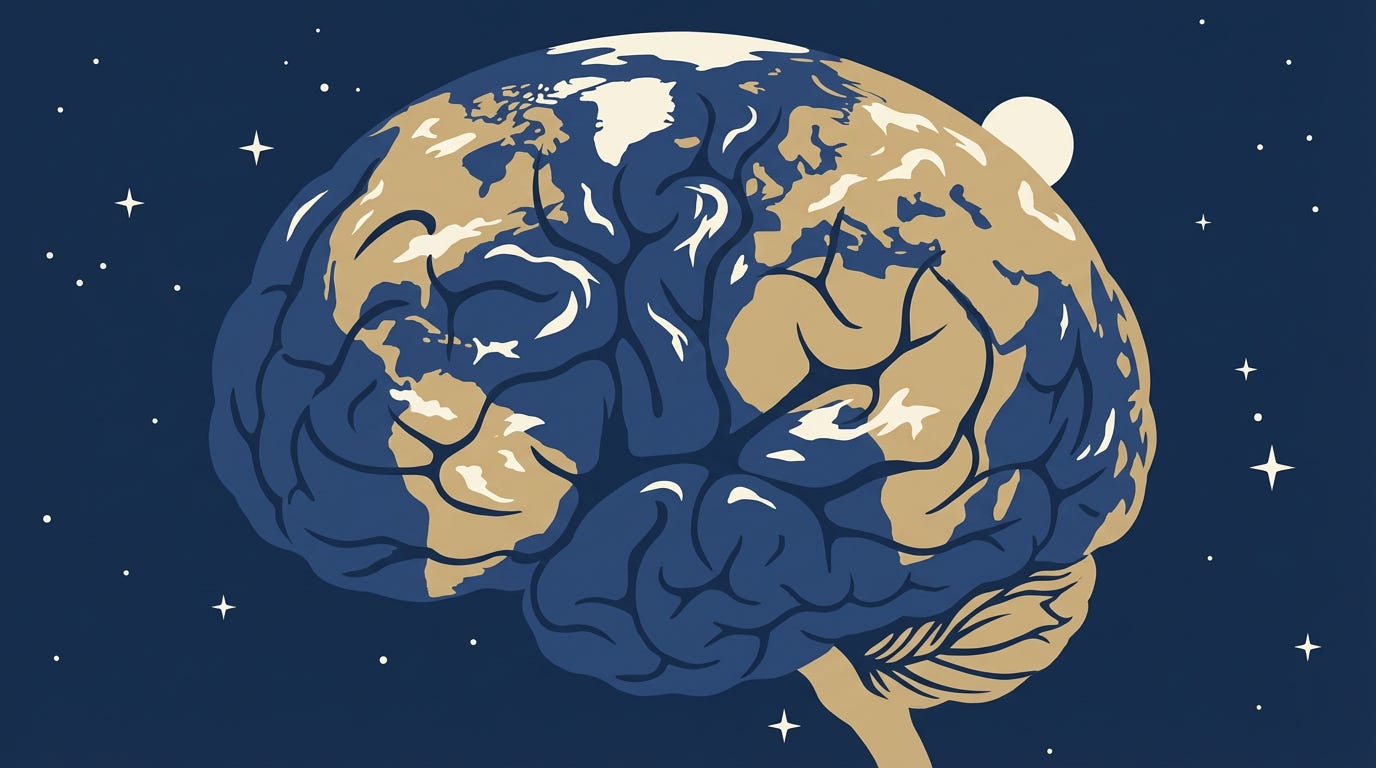
As artificial intelligence becomes more equally distributed and we offload more of our basic thinking and decision- making to agents that know our preferences and contemplate more data than we can imagine, what are we liable to lose? Fashion designer Isaac Mizrahi was once asked the classic “where does creativity come from?” question, and he responded quickly, “a mistake of the eye.” I thought about this a lot over the last couple decades as technology has prevented me from getting lost, and now as AI limits my cognitive meandering. What do we lose as AI keeps our eyes and minds tightly on the rails of reason? We no longer need to think out loud, and as a result we lose the ambient input and debate from other humans with deeply different perspectives. We no longer feel the need to verify what we see when AI persuades us. We no longer hit dead ends in our logic when AI vets our planning for us. And we seldom write or arrange pixels in ways that make no sense but then, miraculously, give us a new idea through a mistake of the eye. Perhaps, as AI increasingly tempts us to offload our thinking and reasoning, we need to “raw dog” our ideas once in a while! Rather than use the most powerful modern tools for a creative task, give yourself a cycle of struggle and unassisted exploration. It might do wonders in ways you don’t expect.
The Antiquated vs. The Classics
What should modern education look like, given what we know about the shifts in job markets and customer preferences? As a parent, I see my kids navigate lessons requiring memorization and arithmetic that don’t seem so different from what I encountered thirty-plus years ago. And yet I know that intelligence itself will be ubiquitous. I think today’s kids will ultimately need to discover and master a passion, ask unique questions, hustle and develop a tremendous amount of agency with their ideas, and have great taste (which, as we’ve discussed, requires the best possible variety of inputs). With this lens, I went into curriculum night at my kids’ school trying to make sense of what they do daily. The art teacher talked about photography and learning how to use the dark room. The computing teacher talked about coding. And the history teacher talked about the geography unit. At first I scoffed: Who develops their own photos anymore? Who codes line by line? Who memorizes geography when we have a world map in the palm of our hands? But then I realized, these are the modern classics, building blocks that are less about modernity and more about basic development. Much like Shakespeare isn’t intended to teach us how to talk, these classes are less about the value of the skills attained and more about the lessons learned while achieving them. Perhaps selecting the right negative and concocting the right mix of chemicals develops both agency and taste? Perhaps the challenge of memorizing the world’s geography or coding your first website are lessons in hustle and relentlessness? Some ways of living and learning are, indeed, antiquated and increasingly useless. But others are just becoming the classics, and we cannot lose our appreciation for the lessons they yield — and the habits they build.
The Dangers of Governing Agent Abuse
As I watch the growing set of generalized capabilities of personal and enterprise agents, I am inspired by just how much is possible when you flip on connectors and allow these agents to makes sense of large swaths of data. But Ii’ve been in a few disturbing recent discussions forecasting what such capabilities could enable in the hands of governments and law enforcement agencies seeking to target citizens. Should a government be allowed to proactively deploy agents on mass amounts of internet data to identify potential concerns? At first blush, why not? We would all benefit from crime being identified as (or before?) it happens. But what if governments are trying, for more nefarious purposes, to persecute someone by unleashing agent swarms leveraging massive amounts of compute to analyze every message the person has ever sent — and their complete digital footprint — in an attempt to construct a negative narrative? Agents tasked with presuming (and searching for guilt) seem to run counter to a constitution where all people are presumed innocent until proven guilty in front of a jury of their peers. The problem is, our Constitution and legal system were developed based on the limitations of humans. It was never humanly possible to constantly surveil and comb through every bit of a human’s existence, especially with the desire to satisfy a narrative of guilt. Given the way government can be used to try and punish political enemies, the prospect of amplifying that process with the power of AI is terrifying. We get all excited about agents removing the friction and inefficiencies from our lives, especially when the result helps us find the retailer with the best price or the bank with the best interest rate. But persistent agents that leave no stone unturned are liable to backfire without clear boundaries that respect basic rights and procedures.

Be Delusional. Amp Up the Volume of Your Own Intuition.
“Take agency.” “Be audacious.” “Be delusional.”
These are common phrases these days as humans seek to define their roles in a world with ubiquitous intelligence. If everyone has access to the same intelligence, how do I stand out and make an impact in this new world?
I think about this a lot, and keep coming back to the uniquely human things that affect our judgment, our creativity, and our potential. Many of these human factors have been seen as weaknesses in the past, but I wonder if some of those ‘weaknesses’ may now help us. One of those factors is our insecurities, the chips on our shoulder that motivate us. Another: Our naive, overzealous measure of our own capabilities. (Fact: 65% of US adults believe they have above-average intelligence, and the stat goes to 71% for men!). We have an astounding ability to transfer and conjure up confidence in areas in which we haven’t earned it. The AI era may be transforming those weaknesses into strengths.
When you hear the stories behind category-defining companies like Uber and Airbnb, or the inventions of the Wright Brothers and Thomas Edison, sheer audaciousness to the point of delusion is a common theme. It is, in fact, our human audacity and ability to suspend disbelief and willfully ignore the practical realities and horrible odds stacked against us that make us capable of doing extraordinary things. AI is great at telling us why something won’t work and suggesting the most likely path to achieve something. But only humans are audacious enough to do the crazy things, assisted by human traits that have evolved from being flaws to being differentiators.
Two things we all need to do more of:
(1) Amp up the volume of your own intuition. And amidst today’s algorithms and personalization of marketing messages, aspire for your judgment to be volume-agnostic. Don’t be tricked by the volume of what you hear and the volume of what flows in. When it seems like the whole world is telling you X is right or wrong, it’s easy to acquiesce. Don’t fall for it. Nothing should resonate more loudly than your own intuition.
(2) Be wary of advice, from AI and from fellow humans (yes, the irony here does not escape me). Often times, the more people you consult for advice, the more likely you are to make a bad or average decision. Why? People and AI advisors are, on average, risk-averse … and, in quantity, risk-averse opinions will blunt your boldness. Other pitfalls of advice from friends: People are liable to envy (and hate on) opportunities they lack or didn’t see. And people tend to mix cynicism (bad) with criticism (good) when providing their opinion. I’m not saying you shouldn’t discuss your ideas with others, but, in the end, you must capitalize on moments in your life in which your conviction outweighs consensus.
A corollary: What should you do when you’re asked for advice? Smart, helpful friends ask great questions rather than stating opinions. Questions unlock further thought and the types of realizations that build conviction.
Ideas, Missives & Mentions
Finally, here’s a set of ideas and worthwhile mentions (and stuff I want to keep out of web-scraper reach) intended for those I work with (free for founders in my portfolio, and colleagues…ping me!) and a smaller group of subscribers. We’ll cover a few things that caught my eye and have stayed on my mind as an investor, technologist, and product leader (including the growing advantage of adaptability, the debate of luxury as absolute vs. relative, the rise of what i’ve come to call “contextual computing” and the incredible opportunity to solve in this space, and…finally answering “where is the BEST place to be in the world right now?” Subscriptions go toward organizations I support including COOP Careers and the Museum of Modern Art. Thanks again for following along, and to those who have reached out with ideas and feedback.