


Edition #43 of Implications.
This edition explores implications around: (1) the emergence of new creative workflows outfitting the next generation of artists, (2) approaches to longevity through biology and data, and (3) a section at the end - touching upon “AI-mageddon,” economic refactoring, quantified self, why product leaders are starting to design for experience over efficiency, and several data provocations.
If you’re new, here’s the rundown on what to expect. This ~monthly analysis (and forcing function to share ideas!) is written for founders + investors I work with, colleagues, and ~43k subscribers. We don’t cover news; we explore the implications of what’s happening.
A few highlights from recent editions, based on reader engagement:
Our malleable memory is a feature, not a bug. As new capabilities to capture and summarize everything become ubiquitous, we must consider the implications of boundless and persistent memory.
Remaking a masterpiece isn’t hard. Making a masterpiece is hard. This fact is often overlooked as people fawn over the capabilities of content generation tools, but originality (the prime ingredient of timeless creations) will be the ultimate scarce, human-crafted asset that people crave the most.
As data moats break down, graphs and personalization become the modern moats. If you’re a developer, or paying attention to any of the new AI startup onboarding experiences, you’ll notice that every company is trying to sync everyone’s data. What’s next?
Cognitive expansion > Cognitive offloading
The theme of this edition, which picks up on topics we have explored over the years, is new technology advancing us as humans. Our creativity, our lifespan, healthspan, and lifespan, etc…how do we make sure new technology expands us, rather than automating away the friction (and with it, our collective improvement).
So far, I see far more excitement about an easier work and life, but cognitive expansion requires creativity and is the real alpha. Our challenge with all the new AI tools we have at our finger tips is to catch ourselves when we’re using them “instead of thinking” and push ourselves to leverage them to make us think wider and deeper. We must fight cognitive laziness in the era ahead.
Modern Chisels
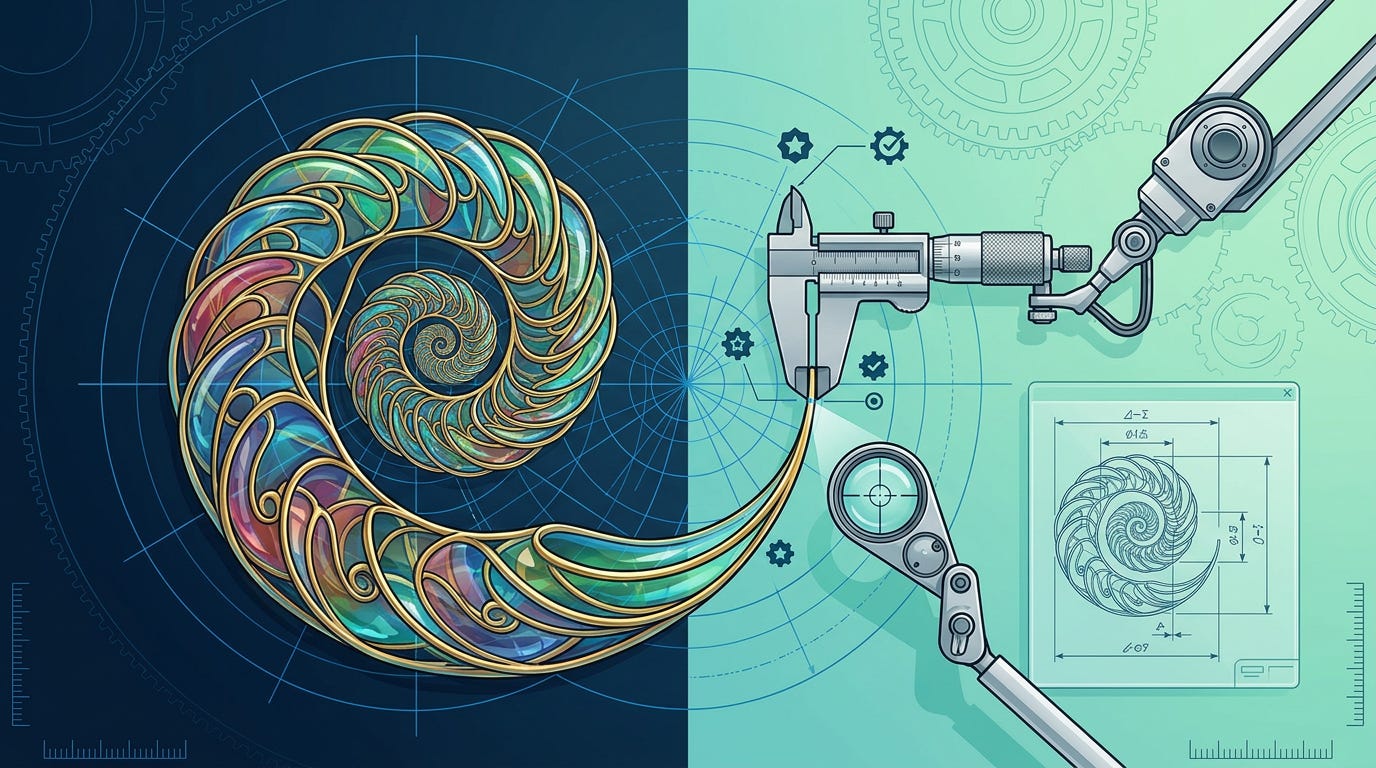
Over many editions of IMPLICATIONS, we have discussed the impact of emerging technology on artistry and how it may advance the creative process rather than marginalize it. Since building Behance (a global platform for ~60M+ creative professionals), I have kept close touch with a large group of designers and artists I admire that are always tinkering with new technology for the purpose of creative expression. One thing has become increasingly clear to me. There are two types of people making stuff: content creators and artists. Both can be creative, but there is one distinct difference between content creators and artists that will define the future of creative tooling and artistic craft – from filmmaking to fine art and everything in between. Content creators are willing to trade control for speed. Artists are not.
Most tech headlines regarding AI are about the impact on content creators and the value of speed and efficiency. The majority of venture capital is invested in tools for the “creator economy” – making ads, making endless amounts of YouTube and TikTok content, making social posts, etc. The focus is on that sector because of its vast, if not infinite, size.
But lost in the shuffle is what artists need.
People conflate what enables creators with what might replace artists. People see the “AI slop” capabilities of new generative models and then declare the “end of fine art” and “RIP Hollywood,” as if the founding of McDonald’s would kill fine restaurants like French Laundry or Nobu.
As in the early stages of any new technology that impacts an industry, people are scared and confused. While the abuses and misuses get sorted out, a new breed of workflows are emerging that combine traditional and emerging technologies across the full-stack of creative storytelling tools.
These techniques are modern brushes and chisels. These new workflows don’t start with prompts and they don’t create slop. Instead they enable more creative risk-taking without compromising creative control. This isn’t fast food, it’s a modern sophisticated kitchen for fine cuisine using both traditional and new ingredients. Some of the world’s greatest artists and most ambitious storytellers are modernizing their craft and raising the bar of world-class storytelling through a series of workflows and techniques that I’ve started calling Precision Gen Pipelines and Workflows (PGW) with friends and artists (and sharing my evolving view on this, for more feedback!).
As we peek over the shoulder of pioneering artists using Precision Gen Workflows, what do we see?
Workflows evolved, not replaced. The PGW’s being pioneered by technical artists I admire still involve products like Unreal, Nuke, Blender, Premiere Pro, After Effects, and the list goes on, but they also now involve building new techniques like LoRa models (small and tightly trained models that can represent anything from a fictional animal to an environment), key frame generation and control nets, generative style transfers over motion capture data, compositing generative layers with depth mapping in gaming engines, and new explorations in rigging elements of a production to equip artists with extreme precision as they express ideas. Much like computer graphics, and other innovations before it, PGW enhances the intricate pipeline artists use to explore new territory.
Crafting, not prompting. Asking an artist to achieve exactly what’s in their mind’s eye through a prompt text box is like asking a painter to paint without her hands. In contrast, PGW’s give creative professionals more control, not less. Unlike mainstream prompt-based creator economy generative AI tools, creations made with Precision Generative Workflows are increasingly non-destructive (edits aren’t permanent and can be undone) and contained (one edit doesn’t change other things unintentionally), allowing artists to seamlessly go back and make changes at any point in the process.
Experimentation before commitment. While the technology and product world has long had prototypes and validation phases before formal product development began, the cost of production of some forms of art (like filmmaking) have always required a formal green light before real dollars are spent. Now, with Precision Generative Workflows that allow for accelerated exploration and discovery, storytellers are able to run tests to learn and become comfortable before taking more creative risk. These new tools become the ultimate sandbox to build confidence in the creative process.
More surface area of discovery, fewer constraints. PGW’s vastly increase the surface area and pace of discovery. Rather than being forced by deadlines and costs to choose and pursue just one direction, technical artists are able to explore a vast landscape of possibilities to find the best solution. Just as the designer Isaac Misrahi once defined creativity as “a mistake of the eye,” the increased allowance for play enables artists to discover variations that spur their creativity and reveal superior solutions.
It’s exciting to see new tools and capabilities added to an artist’s process.
But a few things won’t change…
The human story behind the art makes the art. Visit any museum, read any book, or watch any film, and pay attention to the human stories and histories that pull you in. Whether the art is digital, physical, or even generative, it is the story of those who made it, and why they made it in the context of everything around it, that gives the art value. Great stories that move us are as much about the people and the craft as the story itself. Take the recent acquisition of Cryptopunks by the Museum of Modern Art; some may dismiss these works as meaningless generative pixels, but these works are rooted in lore and deeply human stories about the what and why behind this collection (and some amount of doubt is a familiar pattern over the history of all modern art!). Art is a human endeavor, even as humans embrace digital tools. We are moved by the humanity and story of art, not its efficiency or the mere pigment (or pixels) on a canvas.
Humans will crave more human art. As more AI generated content fills our feeds, humans will crave the craft and human-infused meaning behind art more than ever before. Not only will we want human actors and stories, we will want to see the humanity under the hood. That inclination will make us crave live performances. The process will become part of the product. We should question tools that compromise artistic vision and creative control, and embrace tools that enhance creative control in ways that strengthen the human component and encourage risk taking.
Creativity advances only when artists gain more control. Just as we saw with the invention of the camera (definitively NOT beloved by portrait painters), tools like Photoshop (resented by compositors), the digital camera (initially despised by traditional photographers), and so on, new technology is, at first, doubted. But as new technology finds ways to empower artists, it advances creativity. Disruptive as it may be, technology is part of our evolution. For these new possibilities to coalesce, we must learn to distinguish between the uses and abuses of this new technology and look beyond the way things have always been done to find the better way.
What has motivated me throughout my career is the idea of outfitting creative people to make ideas happen. From founding Behance, leading product at Adobe, writing books like MAKING IDEAS HAPPEN, and now — still — working with artists as storytellers, I am inspired by creative minds who take risk and overcome obstacles to turn their vision into reality. As we navigate the opportunities and challenges of new technology, let’s aspire for every piece or shot to be crafted with precision. Let’s double down on original human stories. Let’s choose technology that unlocks human ingenuity rather than compromising it. And let’s make sure that new tech evolves in ways that empower artists with more control and more possibility than ever before.
Biological longevity vs. computational immortality vs. life while you have it
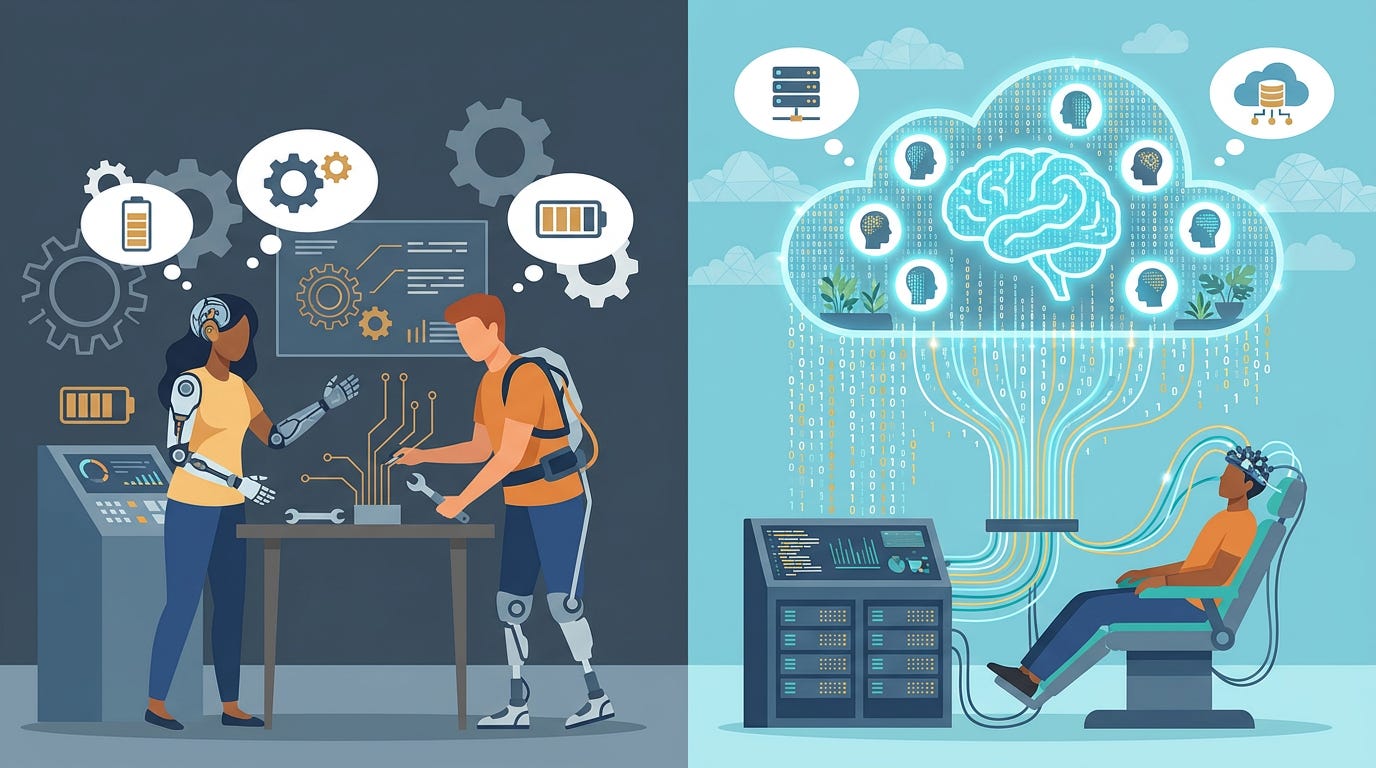
There is a fascinating, growing debate among technologists, futurists, and my more philosophically oriented friends about the merits of investing (our time, energy, money) in the field of longevity. Is chemistry and biology the most promising path, lined with peptides, vitamins, and life-extension breakthroughs from the field of pharmaceuticals and supplements? Or should we perhaps focus on brain-computer interfaces and enable a world of digital immortality achieved by uploading our data and ultimately our “consciousness” in the age of AGI so that we can persist and engage with the world and our loved ones well past the expiration of our physical bodies? The third option, of course, is to let nature run its course. I have a spiritually driven group of philosophical friends who believe we must expire, for the sake of valuing the preciousness of human life and untethering the next generation from our biases and legacy (not to mention freeing physical resources for the next generations). Having watched some of these debates transpire among people I deeply respect, I know one thing for sure: Longevity will become an increasingly polarizing issue over the decades to come.
Mortality Inequality: For starters, we’ll start to see the rich not only live better, but live longer. If, for instance, organ growth and eventually body replacement becomes an option for those who can afford it, all sorts of moral questions emerge. Basic health care is considered a natural right in many countries — what about extreme longevity interventions and technology-assisted immortality
Second-order implications of longevity: Multiple people whom I really respect suggest that kids today may live well into their hundreds. What does this mean for the life insurance industry built on outdated actuarial models – do they become far more profitable? What will the new retirement age be? What will life look like for the burgeoning 100-plus population? Will second marriages become more commonplace in a world where life expectancy exceeds 150? Can we reasonably expect people to continue to adapt and contribute through a century-and-a-half of changes? After all, a 150-year-old today would have been born in the age of the steam engine and horse-drawn carriage and now be contending with AI.
Lifespan vs. Healthspan vs. Joyspan: In Edition #13 of IMPLICATIONS, we discussed the differences between lifespan (how long you live), healthspan (how long you are healthy), and joyspan, which I define as the part of your life that you truly enjoy living. As we all live longer, we should be creative about authoring entirely new chapters that may look entirely different than life as we know it today. Perhaps people wait longer to have kids? Perhaps people spend years in their 80’s living in another part of the world? But let’s hope that we leverage new technology to optimize for the right things.
AI & Politics: Finally, AI will transform health care as we know it. Whatever limits the government imposes on AI research, to protect against dangerous biological agents and other nefarious uses, may also hinder critical advances in medicine and longevity. There is general consensus among those sitting across the worlds of technology and politics that AI will become a core issue (if not THE core issue) in the next round of elections. But what will the underlying issues be? Job security and displacement? Privacy? Data sovereignty? Security vulnerabilities? Geopolitical advantages with AI and the government getting involved with reviewing new models? Loss of human control? The one I anticipate most is the sheer size and gravity that leading AI model companies will acheive. Is there a limit that mega-models can reach, in both indispensability and profitability, that will cause the general population to consider AI a natural resource or utility that needs to be either economically regulated or taxed in some way that benefits the broader population?
Ideas, missives & mentions
Finally, here’s a set of ideas and worthwhile mentions (and stuff I want to keep out of web-scraper reach) intended for those I work with (free for founders in my portfolio, and colleagues…ping me!) and a smaller group of subscribers. **We’ll cover a few things that caught my eye and have stayed on my mind as an investor, technologist, and product leader (including why “AI-mageddon” may prove more severe than “saas-mageddon,” automating self-analytics, economic refactoring, why product leaders will start optimizing for experience over efficiency, and several data provocations on my mind. Subscriptions go toward organizations I support including COOP Careers and the Museum of Modern Art. Thanks again for following along, and to those who have reached out with ideas and feedback.
