


Edition #45 of Implications.
This edition explores forecasts and implications around: (1) cross-species communication (yeah, you heard that right), (2) history and time as the ultimate brand moat, (3) how enterprises must protect their own knowledge advantages, (4) allocating more attention to curiosity, and (5) some surprises at the end, as always.
If you’re new, here’s the rundown on what to expect. This ~monthly analysis is written for founders + investors I work with, colleagues, and a select group of subscribers. I aim for quality, density, and provocation vs. frequency and trendiness. We don’t cover news; we explore the implications of what’s happening. My goal is to socialize edges that may someday become the center.
If you missed the big annual analysis or more recent editions of Implications, check out recent analysis and archives here. A few recommendations based on reader engagement:
Modern Chisels: Precision Generative Workflows - People conflate what enables creators with what might replace artists. While the abuses and misuses of emerging tech get sorted out, a new breed of workflows are emerging that combine traditional and emerging technologies across the full-stack of creative storytelling tools. These techniques are modern brushes and chisels.
We’re entering an era of Efficient AI, where we (and often AI agents on our behalf) will route our queries and actions to the right models. An efficiency ecosystem will emerge. The orchestration layer for models and agents, where routing decisions are made, will become mission-critical software.
The new digital addiction will be living in the past. In the coming era of persistent memory, we will ask questions such as “can we delete or augment our memories?” and “who inherits our memories when we die…or when we leave our job?” We humans are designed to forget, so we need to understand the implications of remembering everything.
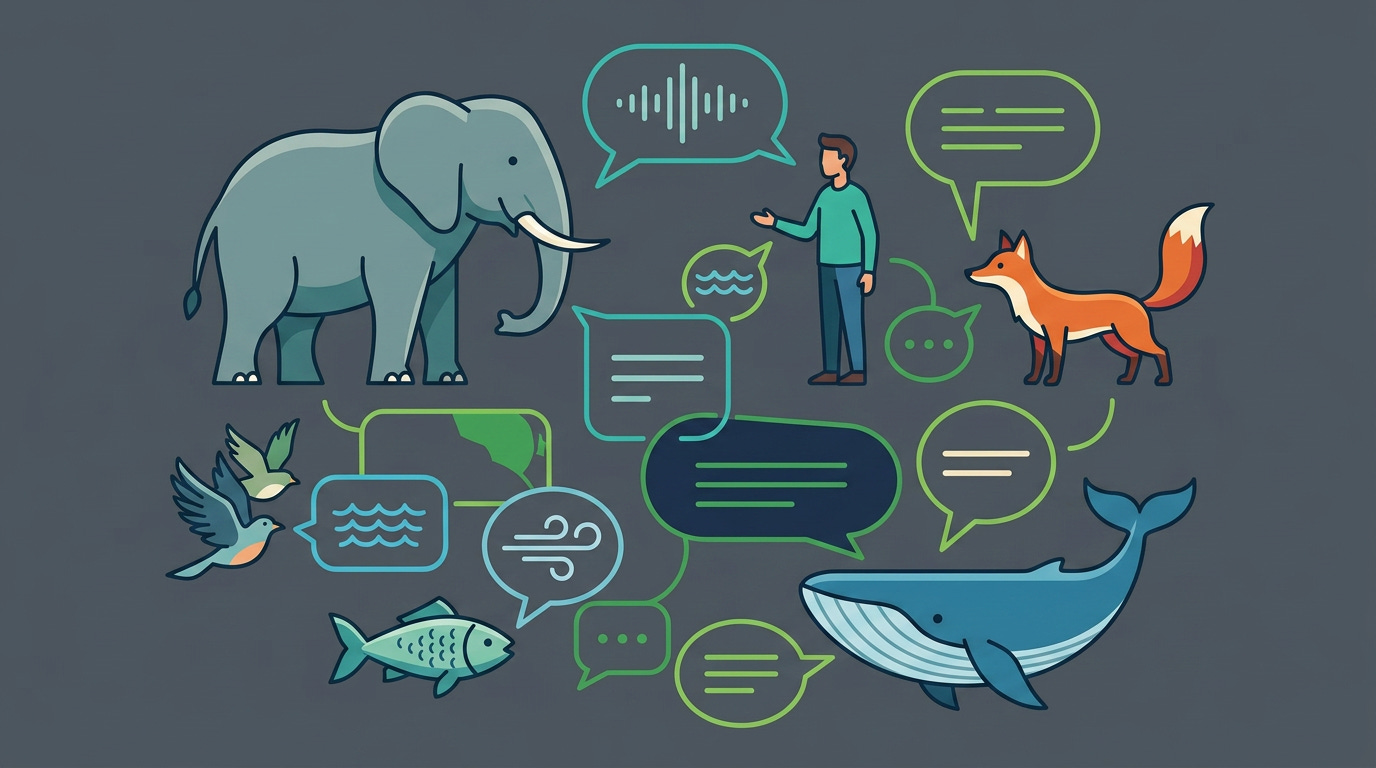
Are We Ready to Hear What Animals Have to Say?
Danish Hussain, the head of mechanical surgery at Neurolink, Elon Musk’s company devoted to brain-computer interface development, recently shared his “hottest take” of the moment on X, declaring “I think we’ll get pretty decent communication between humans and animals within my lifetime.” I am aware of several projects collecting and analyzing large amounts of animal sound data so they can train AI models to decipher the meaning of these noises, but this proclamation from one of the world’s experts on computer-brain interfaces certainly caught my eye. This work is as important for communicating with extraterrestrials we may meet in the future as it is for understanding our own earthly co-inhabitants. With a better understanding of how to map our approach to language to that of other life forms, we can identify new, perhaps universal, patterns of communication and expression. I think the implications of this whole body of science are fascinating…
What can we learn from animals that have seen and experienced earth and life in ways we haven’t? The whole idea of conversing with dolphins that have explored the depths of our oceans and birds that migrate around the world in mysterious patterns and being able to empathize and learn from other species is mind-blowing. For the majority of humanity, we have believed that the world was flat, that the stars revolved around the earth, and that gods in the heavens governed our every action. What else have we always wrongly believed? I suspect our co-inhabitants have much to teach us if we decipher their language and care to listen. We could gain advance warnings of natural disasters that we never thought possible. We could discover things or solve mysteries that would never yield to human knowledge. We could also learn and become humbled by the power of nature through the eyes of creatures who know nature in a way we never will.
What do our pets think of us? I think cross-species communication could be an emotional disaster for pet owners who suddenly learn what their pet really thinks of them. Can you imagine if the first intentional message from your dog is something along the lines of, “why are you so lazy and pathetic?” It could be that your “very good boy!” doesn’t feel the same way about you. Is it possible that dogs are “man’s best friend” simply because the communication largely goes one way? Though, to be fair, cats have always done a pretty good job of communicating their opinion of humans, even without AI.
Cross-species communication will quickly become a geopolitical advantage. We already hear stories of dolphin spies outfitted with cameras, but what might we expect when some nations are able to capture a vast new form of intelligence sourced from the natural life of our world? Unfortunately, most new technology falls victim to some form of political exploitation and I fear this will be no different.
Suffice to say, cross-species communication has wild implications, even as we struggle to communicate with our own species. But perhaps the perspectives we gain may help us understand our planet and connect with one another in new ways.

History is the ultimate brand moat
Longtime readers know about my fascination with how new technology impacts brands. In part, I find the whole notion of “brand” as a construct of human story to be fascinating. A high quality bag or pair of shoes isn’t really imbued with any sense of meaning until it becomes branded. Even the most unaffected, barebones consumers among us are still subconsciously influenced by the narrative behind the goods and services we consume. Now, as Shopify has enabled all of us to become merchants, social media has enabled all of us to become storytellers. As the logistical pipes of the “creator economy” mature, it is worth recalibrating what makes a brand valuable.
I would propose that the last and most defensible attribute of brand value is time — the amount of time and history a brand has endured. The passage of time is the weathering that makes a brand resilient. For proof, think of the many utterly dead legacy brands, like Radio Shack, Sharper Image and even Hostess, that were purchased for use of their name alone.
Hermes, one of the most consistent and well-respected brands of today, exclusively made harnesses, bridles, saddlery, and riding equipment for around seventy years before the company began applying their saddlery leather craft to luggage, travel goods, sports goods, and eventually handbags. Similarly, the luxury brand Brunello Cuccinelli only made dyed cashmere women’s sweaters for over a decade before expanding the brand to menswear and other apparel. Nowhere is the brand value of time more apparent in everyday society than in Japan, where the respect and stature of most restaurants and stores — and their chefs and craftsmen — are hard-earned through decades of focus and consistency.
The time invested in something is directly correlated to how we perceive value. As we enter a world of abundance — a world in which AI can write things, machines can print 3D objects, and anyone can, working alone, create a product and start a brand around it — I suspect we will crave objects and experiences that are deemed worthy based on the amount of time invested in them. What are the implications of this growing “moat” around any branded product or experience? The marketing and storytelling we do as brands will evolve to show the time and human craft invested in what we are selling. Old brands with roots will be grafted onto new product and service categories in an attempt to leverage legacy. And perhaps the greatest gifts we can give one another are expressions of the time we spend: a handwritten letter, a piece of art we made by hand. As we crave things with roots, the time required for roots to grow becomes ever more precious.
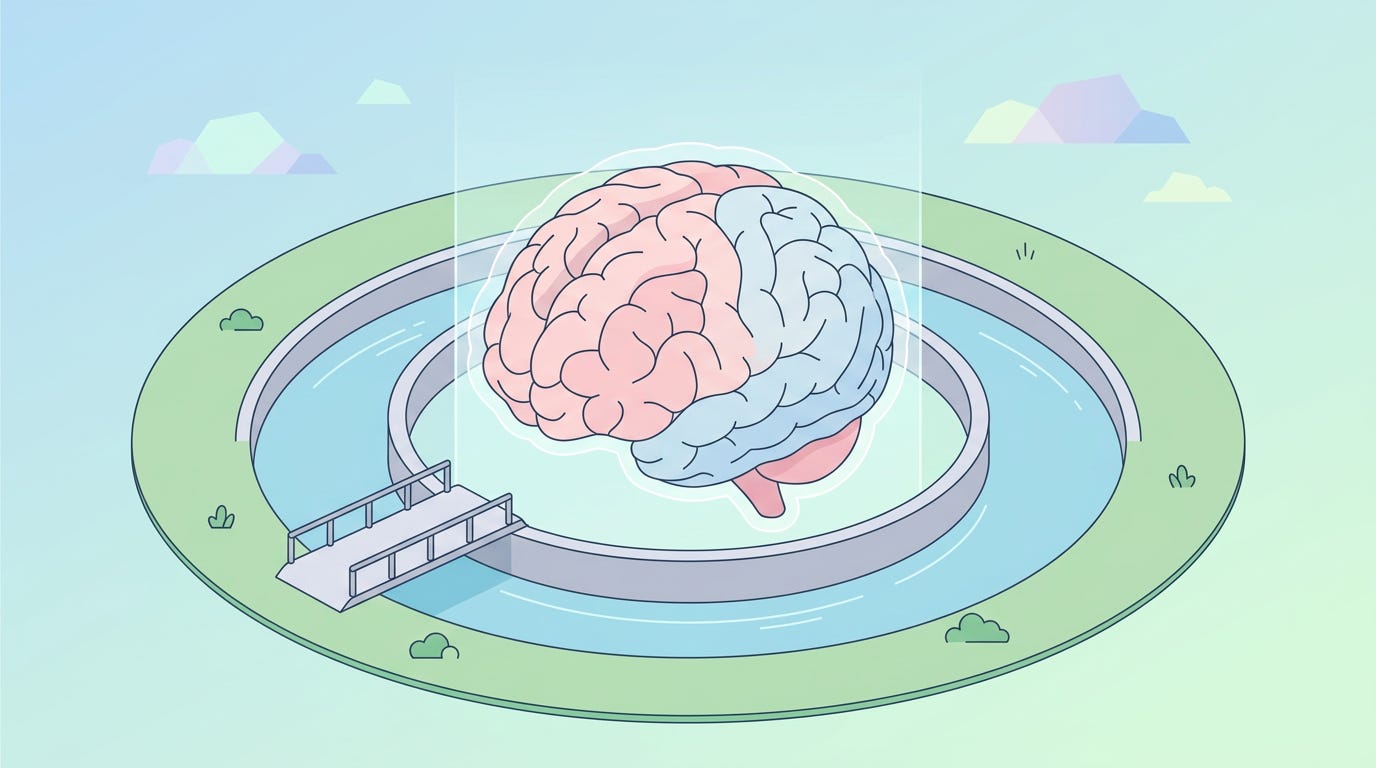
Fortifying the moat of enterprise knowledge
We’ve debated whether or not data will continue to be a moat in past editions of IMPLICATIONS. Many of us read Satya Nadella’s essay titled “The Reverse Information Paradox” last week on the need (I am paraphrasing) for companies to stop willingly teaching the nuances of their business to frontier models and sharing their reasoning to the point at which their own company’s knowledge is no longer proprietary. A few days earlier, Alex Karp from Palantir spoke out against a similar trend of frontier models being positioned to disrupt their own customers by leveraging the rich and deep reasoning layer and institutional knowledge of the end users of these models. The rallying cry is clear: Companies and people need to start owning (or having exclusive access to) the learning derived from their own contributions to these knowledge-hungry frontier models. Otherwise they may lose their “knowledge moat” when any competitor is able to leverage their accrued expertise and best practices. What might we expect next?
Enterprises get more serious about open-source models. As more of our everyday needs are satisfied by increasingly powerful open-source AI models, we can expect companies to start growing their own variants. Companies will have their own “on premise” or “private cloud” AI solutions that continue to evolve and learn from the way they are used and ultimately offer a proprietary knowledge advantage for the organization.
Cloud providers like Amazon, Azure and Google Cloud may start offering instances of frontier “roll your own version” models. Companies are starting to demand open weights and the ability to evolve the models they use in ways that uniquely benefit them over time. Cloud providers will benefit from this sticky business if they can meet the needs of big companies.
Apple, Google, and startup consumer hardware companies have an opportunity to really deliver on personal, private AI. Consumer hardware companies will successfully make the pitch that our personal AI should live on our devices so that the learnings of our everyday AI interactions stay private and available only to us. People want their inquiries to be private. And they will derive the most value from their AI when it has access to all of their data. So, the obvious solution is highly private, all-encompassing AI models that live only on your device. After all, many people don’t want to discuss a highly personal dilemma with their personal chatbot, only to find out that their interaction will become training data for ubiquitous AI models around the world.

Allocate more attention to curiosity
As we’ve discussed ahead of the era of SUPERHUMANITY, we must do more of what each of us can uniquely do. This requires us to optimize for originality, more consciously tune our taste, and exercise extreme amounts of agency. I’ve become obsessed with the era ahead in which human contribution must become more important, not less.
As I face challenges and attempt to build new things in my work and life, I ask myself a set of recurring questions:
Could AI or anyone else do this, or is this something I can uniquely do?
If the latter, what about my identity or past experiences outfits me to uniquely do this?
Am I allocating my energy and attention right now on meaningless things I will forget and things that anchor me (and my ideas and perspective) to the mean?
Or am I spending energy on fresh experiences and inputs that develop unique ideas and further differentiate my perspective?
I’ve had a few realizations, starting with my deep desire to wrangle back my attention and double down on my curiosities. While algorithms keep me informed of today’s news and “the current thing,” the cost of this zeitgeist-driven stream (to which I feel addicted, at times) is energy directed away from my true curiosities. I crave more time to follow the threads of my obscure fascinations, and I firmly believe that such curiosity-fueled binges of imagination yield new lenses on the world. The strange and weird ideas that surface through dedicated time and attention are, in fact, the edges that may someday become the center. I often feel like attention-seeking algorithms are robbing me of the very thing I value most: creativity born from curiosity.
I am also now super-conscious of my “mode.” Am I in “Static Mode,” consuming (often scrolling through) content that anchors me to the mainstream or simply reinforces what I already know? Am I in “Growth Mode,” consuming fresh inputs in the form of new IP and ideas from others, experiences that expand my mind and provide unforgettable stories? Or am I in “Creative Mode,” creating and, in some cases, making something that I hope will be a valuable input for others.
My major takeaway here is the need to take back the reins on our attention. AI will make algorithms exponentially more effective at keeping us tied to the day’s programming and stuff we already know. But originality and other forms of uniquely human creations will only come from the time we spend following our curiosities, expanding our surface area of inputs, and further baking our ideas. Perhaps this is the ACTUAL war between machines and humanity: Machines will increasingly command our attention and subsequently marginalize human originality (and degrade culture) — unless we humans allocate our energy and attention with more intention.
Ideas, Missives & Mentions
Finally, here’s a set of ideas and worthwhile mentions (and stuff I keep out of web-scraper reach) intended for those I work with (free for founders in my portfolio, and colleagues…ping me!) and a smaller group of subscribers. We’ll cover a few things that caught my eye and have stayed on my mind as an investor, technologist, and product leader (including the concerning ways “simulation AI” is likely being used in politics, an outlook for AI models competing to be the default, and data provocations on teen alcohol consumption and new forms of management for AI-era teams). Subscriptions go toward organizations I support including COOP Careers and the Museum of Modern Art. Thanks again for following along, and to those who have reached out with ideas and feedback.
