


Edition #49 of Implications.
This edition explores forecasts and implications around: (1) the era of contextual computing (which I believe will replace “apps” as we know them), (2) the theory of the “bliss out,” (3) the risks and rewards of a new generation of simulation start-ups, and (4) some surprises at the end, as always.
If you’re new, here’s the rundown on what to expect. This monthly analysis is written for founders + investors I work with, colleagues, and ~40,000 subscribers. I aim for quality, density, and provocation vs. frequency and trendiness. We don’t cover news; we explore the implications of what’s happening. My goal is to ignite discussion, socialize edges that may someday become the center, and help all of us connect dots.
Check out recent analysis and IMPLICATIONS editions here (each is exhaustingly crafted, often times at 30,000 feet). A few recommendations:
It was never humanly possible to constantly surveil and comb through every bit of a human’s existence, especially with the desire to satisfy a narrative of guilt. But now it is, and our Constitution and legal system weren’t built for agents that can defy the limitations of humans.
2026 is proving to be the year when consumer AI is finally figuring itself out. What are we realizing as this all unfolds? Here are 10 essential insights for the modern product builder in the age of AI.
How do we grasp exponentialism? How do we become comfortable with the inevitable? At the risk of falling for humanity’s natural narcism about the importance of OUR lifetimes, I do believe these questions are unique for the moment.
The Era of Contextual Computing
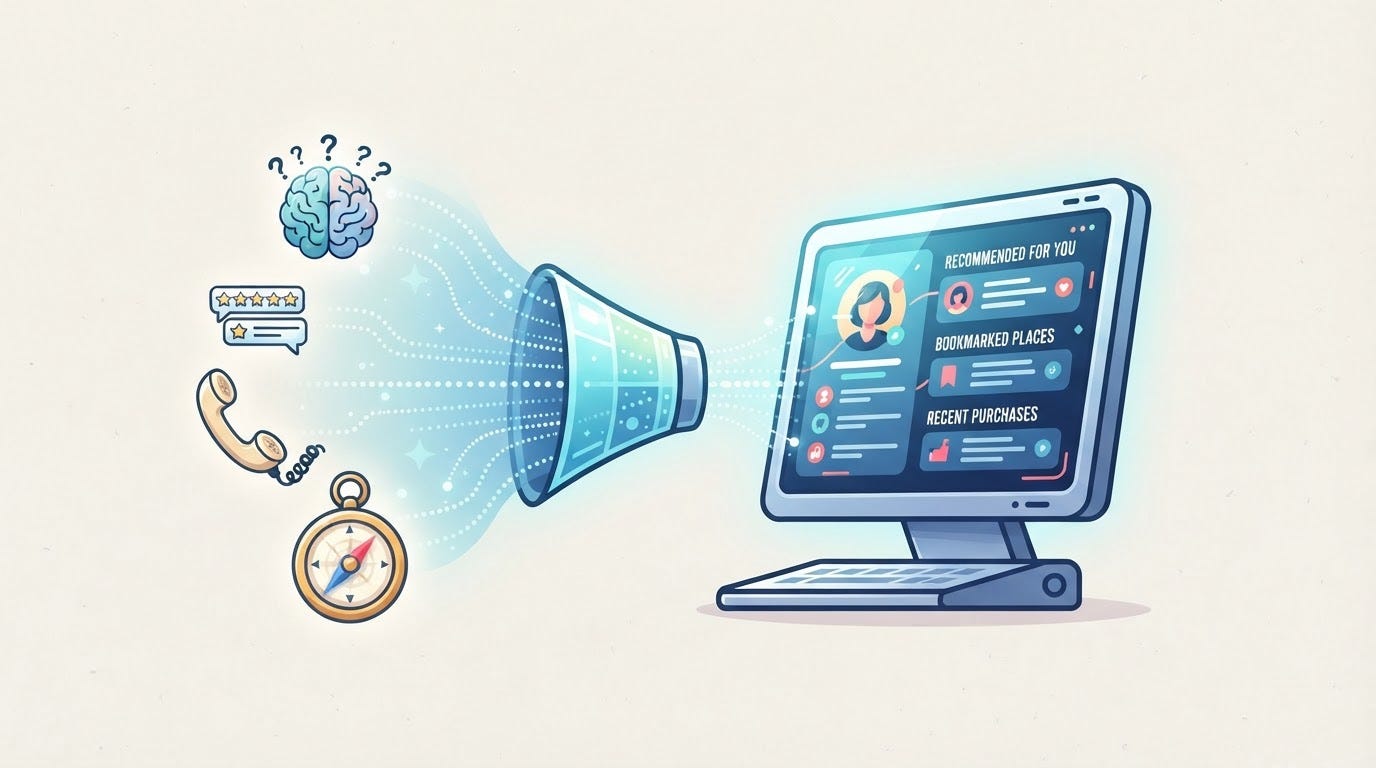
We’re quickly entering an era of contextual computing, where the next generation of our devices, operating systems, and application-like experiences (I hesitate to call them “apps”) will spawn from the context we provide them and be tailor-made to our preferences. What is your context? It is everything from decades of your calendar and email data coupled with the history of your geolocation and transaction data that yields more insight into your past and preferences than even you remember about yourself. With a quick sync of your context, every digital and agent-based experience becomes so incredibly tailor-made that every generic app and website that came before it will seem entirely antiquated. I believe this era of “contextual computing” will give rise to new operating systems that may finally rival those that have dominated consumer electronics for the last few decades. Imagine getting a new type of specialized device for your home or even your keychain that, after a quick sync, knows your preferences and can practically read your mind. I also believe that contextual computing will replace the very notion of “app stores” with a smart set of contextual capabilities that pop up when and where you need them, based on who you are, your preferences, and your location. This moment empowers the builders among us to completely reimagine user interfaces and consumer devices.
It is an exciting outlook toward sensationally new types of products and intelligent experiences, but their potential will be bound by the context we provide them. Right now, we’re still grappling with the privacy implications of providing new agents context without losing control of our data. We’re stuck in a conundrum of wanting the benefits of sharing our context without compromising our privacy. And let’s face it, our trust in Silicon Valley and its leaders has been shaky lately. I continue to believe that trust and privacy, often conflated but nonetheless related, are the greatest vector of innovation for consumer AI. Whoever figures out these concepts is poised to get the most context from each of us. We are also navigating the very early innings of the context wars, as agents seek to be hydrated by data, data stewards weigh the costs and benefits of allowing connections, and customers weigh the risks of sharing their data. As consumers, we still lack a portable, single source of truth for context, and we still don’t know who to trust and how to reconcile the trade of privacy for convenience. We can imagine sensationally new types of products and super-intelligent experiences, but their potential will be bound by the context we provide them.
The Bliss Out Scenario & Sustaining Humanity
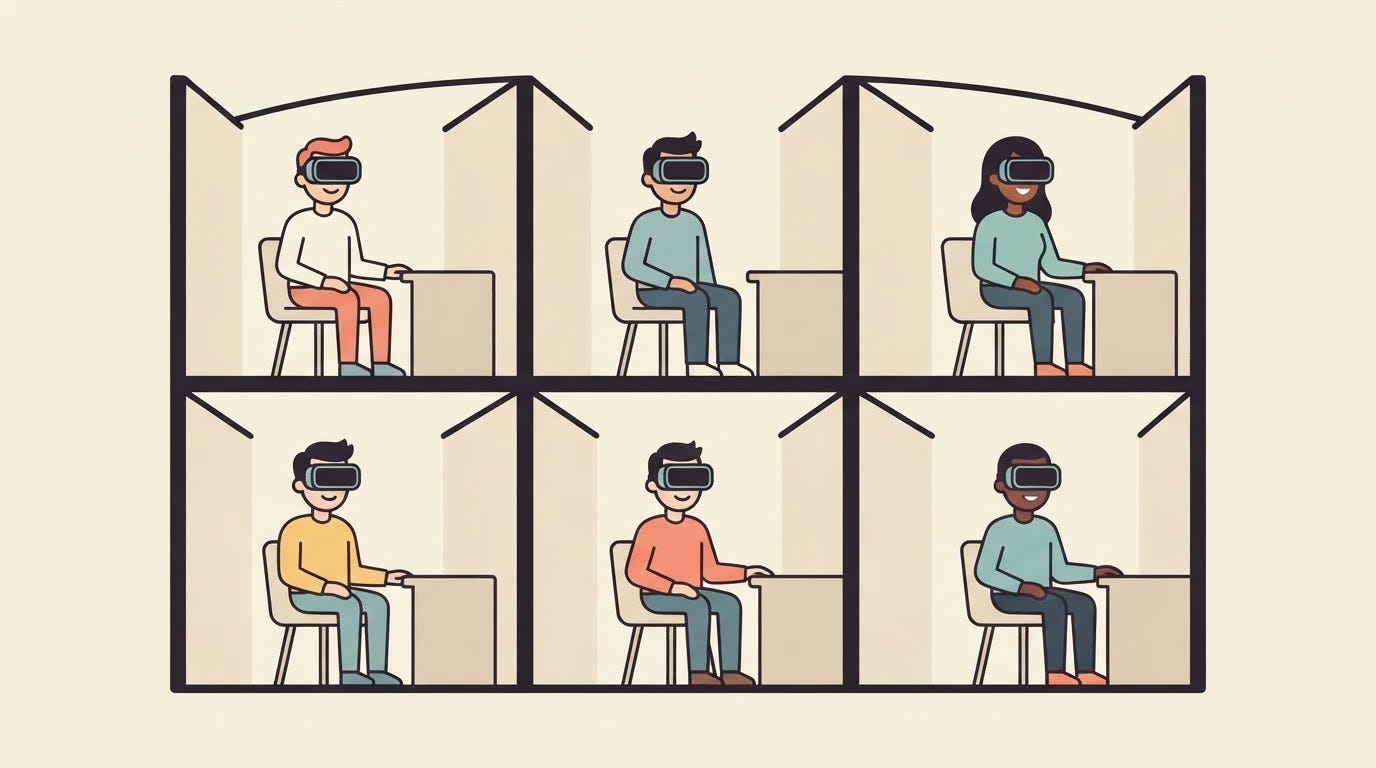
“How will humanity as we know it come to an end?” has been an one of society’s age-old questions. War? Incurable disease or manufactured viruses? Machines turning on us? There are many nightmare scenarios we can envision and debate, but a growing consensus view among thinkers I respect is less about violent extinction and more about an inescapable ecstasy dream — one with the side effect of falling birthrates to the point of gradual extinction. Let’s call it the “Bliss Out,” in which humans become so immersed in a frictionless world of their own choosing, and so pacified by technology anticipating their every need, that future humans simply lose interest in the gritty, uncertain, expensive, and arduous parts of life, including having children. If independence, coupled with technology, yields an inner indulgent world with countless thrills, will people escape more and more of real life? Dystopian, I know, but I think about this often as I consider the impact of algorithms and AI, shifts in demographics, and the future of virtual reality and generative world building.
This question of “what brings intelligent life to an end” is often posed by astronomers searching for signs of extraterrestrial intelligence. We have found no evidence of “Dyson spheres” (advanced civilizations constructing an array of technology around their closest star to capture the ultimate source of energy in their solar system) and no definitive evidence of alien spaceships or alien visits to earth. The shockingly depressing answer may simply be that they had more interesting things to do with their time. Perhaps we haven’t found any advanced civilizations because they, too, have become self-absorbed in their inner worlds. Perhaps these advanced civilizations “blissed out” in their own simulated perfect worlds and simply lost interest in exploring the greater universe. I must admit, I have come around to this theory as I witness the pace of technological progress paired with the rather primitive nature of our dopamine-driven brains and natural human tendencies. It would be ironic if the greatest threat of AI was ultimately indulgence and endless satisfaction to the point of extinction. Perhaps THE MATRIX got one thing wrong: Instead of being plugged into a simulation without our knowledge, we willingly plug ourselves in. Humanity may not come to an end through famine or war or AI robotic takeover, but rather from a state of truly satiated complacency that causes people to tune into themselves rather than each other.
On a more optimistic note, we see several countertrends underway that offer hope. The demand for live events and attendance at theaters to see films together is going up among the under-35 demographic. People crave shared experiences that foster connection and common conversations. I am also seeing a growing desire for high quality storytelling despite increasingly powerful algorithmic feeds of short-form content. Our growing appetite for meaning, non-scalable live experiences, human-crafted stories, and brands with roots is part of our salvation. These artifacts of humanity are what bring humans together. And bringing people together is the one solution for a falling birthrate. The more we value uniquely human creations and human connection, the more human we will remain … and the more humans we will continue to create.
The Risks & Rewards of Decision by Simulation
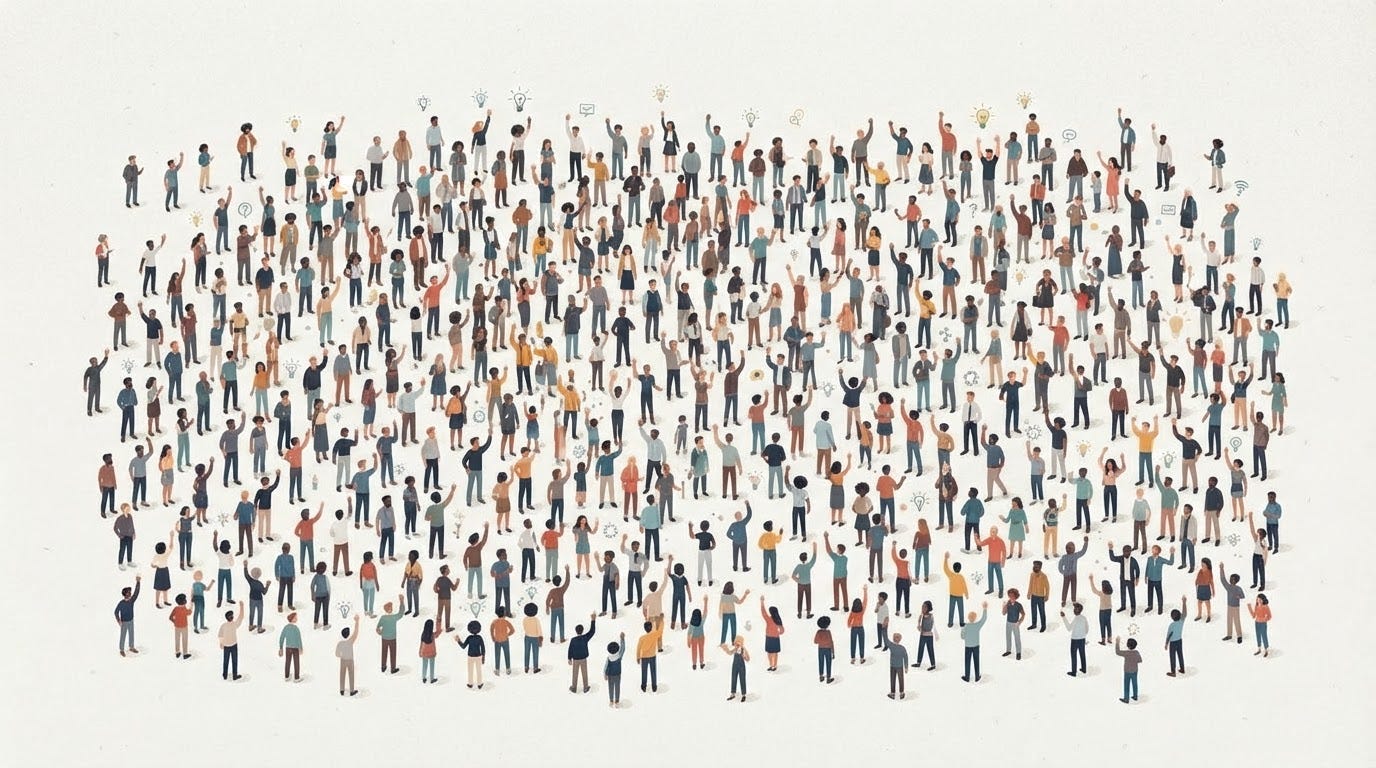
There are several very promising simulation-focused startups right now, including the much discussed Simile as well as another company with different enterprise use-cases still in stealth mode, founded by a former colleague. This new cohort of companies is founded on the big bet that, with enough wildly diverse, holistic data across the general population, they can assemble statistically accurate simulated populations of people to test anything from slogans and pricing to fashion and political decisions. These new tools use the world’s most sophisticated models alongside large amounts of structured and proprietary data from large swaths of the population to understand how we think and make decisions. And they are increasingly accurate, with many marketing and price testing type use cases against specific demographics proving to be 90%+ accurate when comparing projections to outcomes. No doubt, this is an area of innovation in the early innings and bound to change many parts of work and life. When you can run a decision by a simulated population of people and analyze responses by demographics, all sorts of possibilities (and implications) arise.
Simulated Investing Diligence: Imagine any company considering an acquisition, or any investor considering an investment. They could deploy a simulation to test their synergy model or theories and see the likely outcomes of the scenario with various degrees of certainty. Perhaps you’re wondering whether your current customers would be willing to pay for a new adjacent product? Perhaps you’re wondering how a price increase would impact brand sentiment and the overall business? Perhaps you want to understand how a merger of two companies might impact consumer behavior in certain geographies? The sophistication of simulations to model and understand the implications is astounding.
Simulation Therapy: Imagine struggling to relate to a parent or to help someone with a drug addiction. Simulating your intervention or treatment plan could give you a very accurate outlook for your strategy. I can imagine a world where it becomes malpractice to NOT run a simulation prior to treating a patient. Perhaps you can even use the simulation analysis, transformed into a compelling animated short story, to help the subject understand the likely consequences of their actions.
Simulated Marketing & GTM: Perhaps the most obvious use cases for these services are simulations in marketing and price testing. You can now quickly run the marketing copy and campaigns against simulated audiences and receive rather accurate predictions of performance based on different factors, including slogans and price points. Focus groups have well-known limitations — too small sample sizes, the potential for groupthink, the effect of an artificial environment on behavior, etc. In contrast, simulations can be tweaked to eliminate the bias that happens within a focus group and can, theoretically, give you a more statistically significant understanding.
Simulated Dating: Imagine running a simulation of your compatibility with a prospective date, leveraging their social accounts and basic demographic data to find a likely match prior to the “blind date”? I suspect that the next era of social dating apps will leverage simulations to identify those you are likely to have good chemistry with and perhaps even assist with suggested conversation-starters.
Simulated Politics: The effect of accurate simulations on politics will be profound and perhaps surprising. On the negative side, simulations may make a politician’s personal commitment to a policy or perspective even less durable. The ability to run a set of political slogans and campaign principles against simulated audiences is liable to enable an era of more polarizing politics as results suggest that a more stark position will more effectively rally the base. You can imagine, especially in the primary phase of US elections, which typically favor candidates who embrace extreme positions to emotionally engage voters, that simulations of polarizing policies and talking points will become a common playbook for politicians to ignite their base — even if it means alienating the mainstream voter. If simulations show that a certain position is unpopular with voters, how many politicians will have the courage to stick to their principles? On the other hand, accurate simulations may actually drive more bipartisan agreement. If the simulations show that only one position on immigration, trade policy or anything else resonates with voters, will we see politicians on both sides adopting that position, perhaps with only cosmetic differences? Finally, the technology could head off some of the more distasteful political tactics. Imagine if Vivek Ramaswamy had simulated ahead of time the reaction to his widely reviled campaign ad in the Ohio governor’s race. It’s hard to imagine him going through with the spot.
Ideas, Missives & Mentions
Finally, here’s a set of ideas and worthwhile mentions (and stuff I want to keep out of web-scraper reach) intended for those I work with (free for founders in my portfolio, and colleagues…ping me!) and a smaller group of subscribers. We’ll cover a few things that caught my eye and have stayed on my mind as an investor, technologist, and product leader (including the new abstraction layer for retail investing, the risks of maintaining your own software, some realizations about talent cultivation, and the “vibe manufacturing” economy). Subscriptions go toward organizations I support including COOP Careers and the Museum of Modern Art. Thanks again for following along, and to those who have reached out with ideas and feedback.
