

What are We Gonna Do Now? Winning The Era of Superhumanity
We must cultivate our sources of taste, override the ancestral “logic” that has restrained us since the dawn of humanity, and learn to be jazz partners with thinking technologies.

Edition #39 of Implications.
This special edition introduces a new framework for the uniquely human capabilities we must capitalize on for the future. I see an era of “Superhumanity” ahead of us, so long as we act accordingly. Future editions will explore various implications of Superhumanity across our work and life (as well as the likely swings of the pendulum in culture and society), but today we discuss the concept.
If you’re new, here’s the rundown on what to expect. This ~monthly analysis is written for founders + investors I work with, colleagues, and a select group of subscribers. I aim for quality, density, and provocation vs. frequency and trendiness. We don’t cover news; we explore the implications of what’s happening. My goal is to ignite discussion, socialize edges that may someday become the center, and help all of us connect dots.
I shared a list of outlooks for 2026+ in a final special edition of IMPLICATIONS at the end of December, and it was fun to get your feedback and hot takes. From the emergence of “proof of craft” and shifting consumer desires — to data becoming less of a moat, hardware becoming more of a moat, and ambient listening going mainstream — and many more… You can review them here.
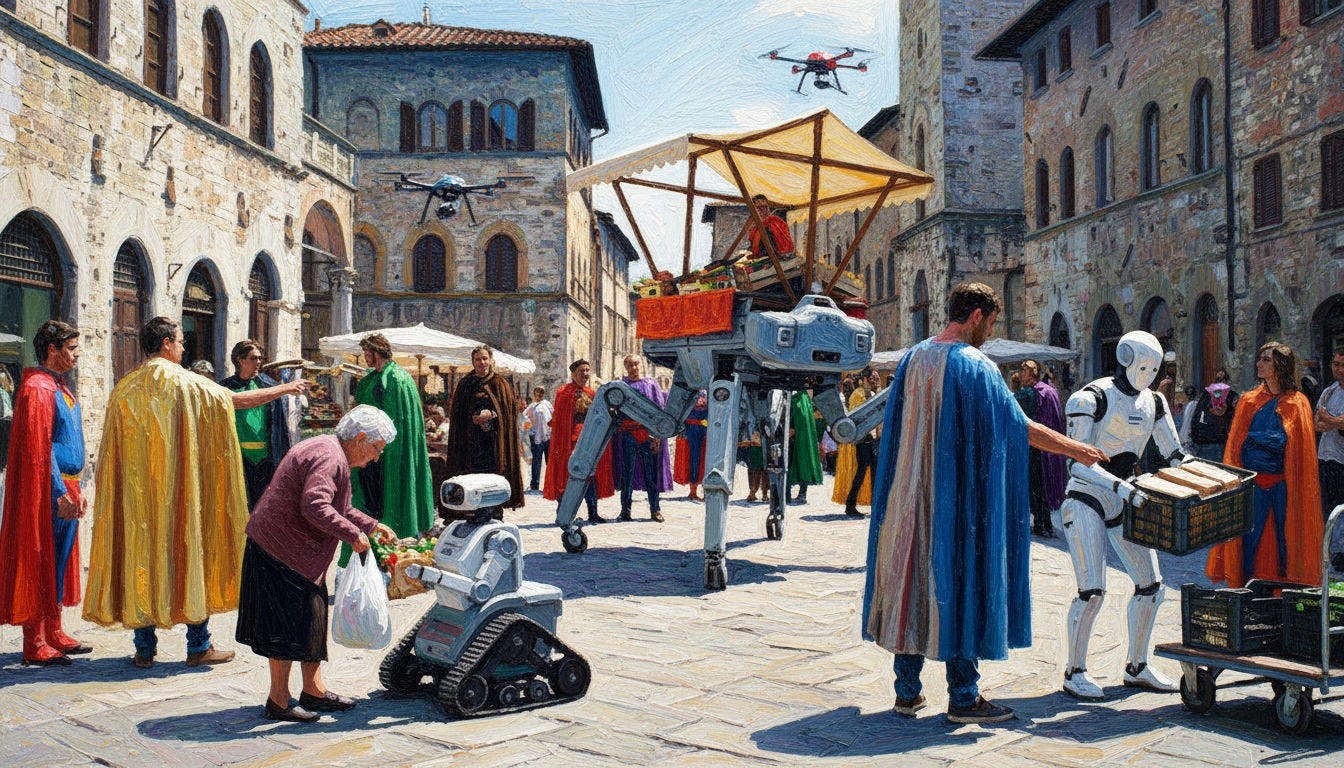
What are We Gonna Do Now? Crushing It in the Era of Superhumanity
It’s a new year, and I am dedicating a lot of my energy and focus to a new theme that is critical for each of us — and for future generations: What are we gonna do?!
As the capabilities and adoption curve of AI accelerate, we humans must strengthen and increasingly flex our uniquely human powers. Much like a company facing disruption, we need to innovate to meet the future needs of culture and people, and we need to double down on what differentiates us as humans.
I won’t hypothesize too much on what work and life will look like five years from now, but suffice to say: It will be drastically different.
We will have an unfathomable memory and assembly of datapoints in our lives that will “turn the lights on” to the world around us.
AI will revolutionize our healthcare, education, financial management, and daily planning, rendering todays norms as malpractice.
Content and digital experiences of all kinds will be created and personalized in real-time. DIY (custom-tailored) software will run our work and lives, as any interface and working software system can be conjured up on command.
Our communications, relationships, and decisions will be augmented by a level of proactive thinking we can barely comprehend.
Yeah, life will be different. As this is happening, the department of labor shared data showing that nearly 25 percent of the unemployed are US college graduates.
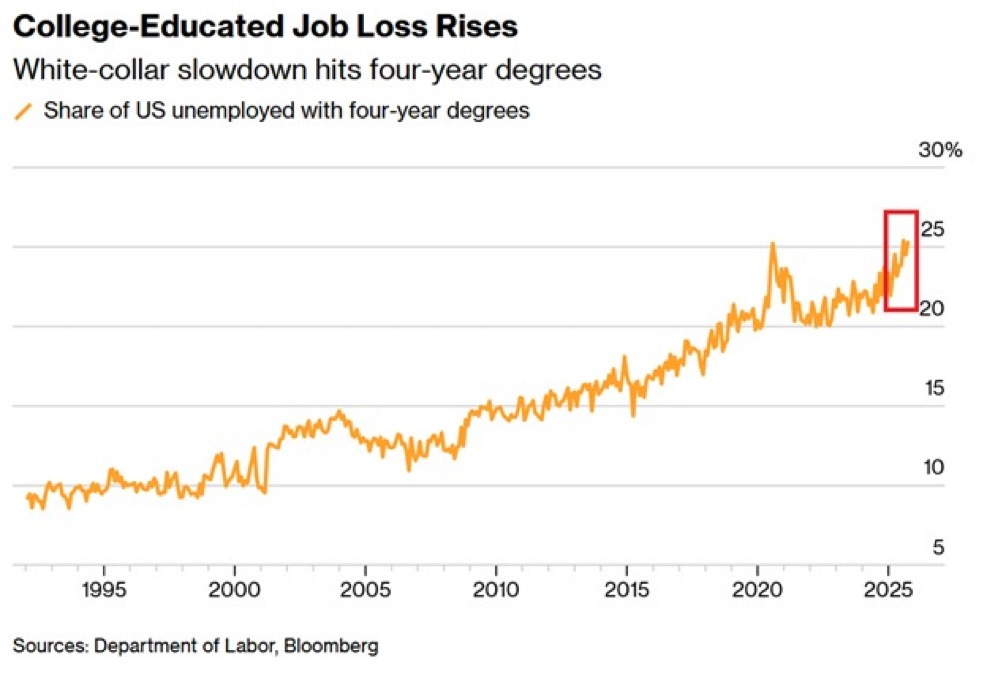
The fear of job disruption exists alongside the cautious optimism that new technology always ushers in new — albeit different — opportunities. But what does this world look like, and how do we outfit ourselves (and the next generation)?
Two Possible Futures
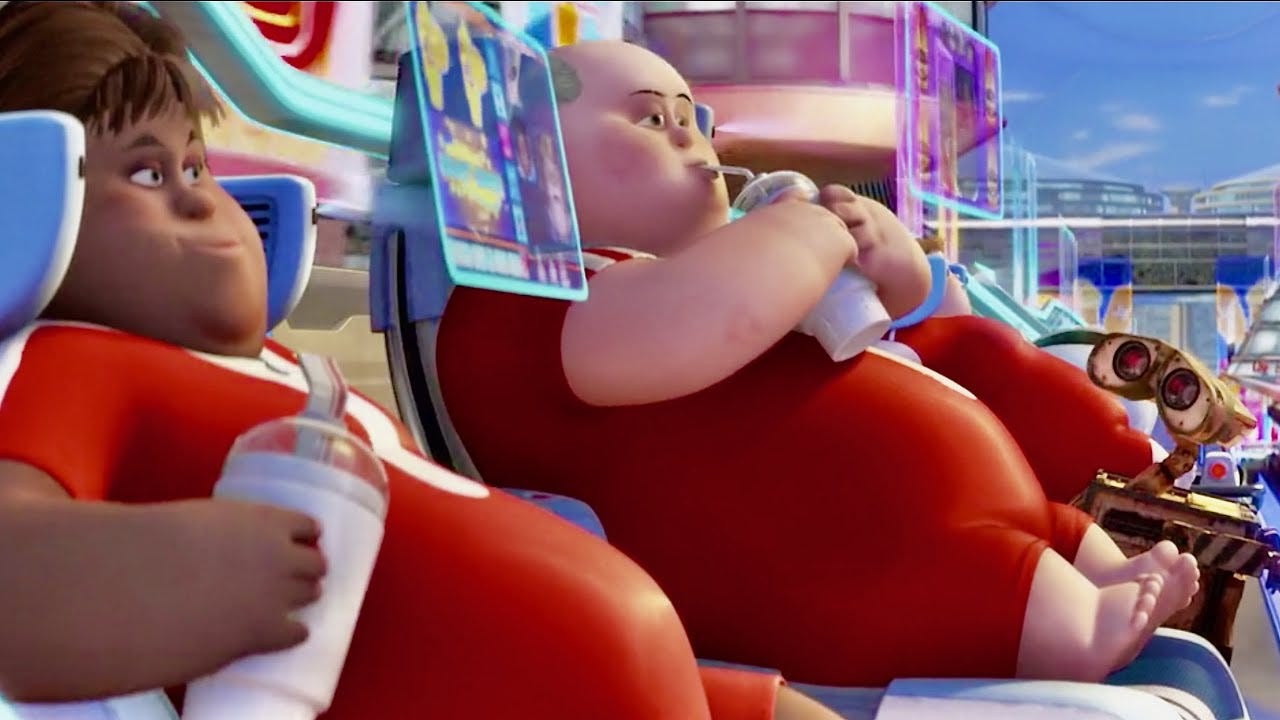
I see two possible futures, one where humans are less important and one where humans are more important. Neither of these is a doomsday outlook. In fact, some of the most optimistic researchers I know imagine a world where humans won’t have to work as much and we all get to bask in abundance. But ultimately, in such a world humans are less important as AI automates and augments work and life to the point where we sit back and “orchestrate” (Wall-e!).
I want to advocate for the other possible future, one in which humans are more important. A future in which humans become tastemakers and contrarians by default, where we optimize for (and monetize) experiences over productivity, where we start to override the natural human tendencies (often driven by ancestral fears) – the stuff that helped us survive while restraining our agency, and where we become exponentially more audacious — often times overriding logic and ignoring the odds (using the backstop of emerging technology to hedge) — in ways only humans dare. Let’s call this era of SUPERHUMANITY, because it will be truly distinguished by the expression and exercise of our uniquely human abilities.
Maybe you are mid-career and anxious about your outlook — or anxious to finally pursue that one idea you’ve always had but never fed?
Maybe you just graduated college and are wondering what path to pursue?
Perhaps you’re a parent wondering how to best outfit your children for this new world?
Regardless, superhumanity should be your aspiration. We must cultivate our sources of taste, override the ancestral “logic” that has restrained us since the dawn of humanity, and learn to be jazz partners with thinking technologies.
Cultivate taste through your inputs, filters, and discernment.
What is taste? Where does it come from? How is it cultivated and improved over time? And why do we humans have such an advantage?
I see three distinct drivers of taste: Inputs, Filters, and Discernment.
INPUTS are the experiences, knowledge and data you seek. Your brain is a system that absorbs whatever is around it, and then mashes it together alongside a lot of emotionally-driven randomness that results in all sorts of ideas, mistakes of the eye, and a lens on the world that resembles a fingerprint, unique only to you. Curating your inputs is vital. In a world of data and information overload, what inputs do you choose?
FILTERS determine what you decide to block out. In a world of noise, lowest common denominator content designed for algorithms, and endless trends and fads that pull you down to the baseline of what is mainstream and soon cliche, what do you actively choose to ignore? How do you apply and fortify your filters in this modern world? Your filters preserve the uniqueness of your lens on the world.
DISCERNMENT is the choices you make. Based on your unique lens resulting from your many inputs, and the clarity of your signal based on your filters, you make choices daily. Choices of how to write or say something. Choices of what to create, where every brushstroke should be applied, what to cut in the editing room, who to hire or surround yourself with, what to wear to express your identity, what risk is worth taking, and what idea is worth pursuing.
Your taste (your inputs, filters, and discernment) is your human moat in an AI world. Your taste keeps you valuable and gives you the upper hand in determining the future.
As AI commoditizes the ability to make things, the value shifts to those with a superior ability to choose. Taste is not just about aesthetics; it is the human superpower of noticing what is relevant before the algorithm does. It is knowing what do and exclude, and identifying the edge that may someday become the center.
Key Takeaway: Optimize your taste by becoming more deliberate with your inputs, filters and discernment. As AI lowers the technical barriers to execution, the “human premium” shifts from doing to deciding — and not being so easily dissuaded and persuaded. Get serious about the slate of experiences you seek (your inputs). Be rigorous with the filters you apply (be cautious of algorithmic feeds, don’t just watch what Netflix or Instagram suggests, be wary of lowest-common-denominator defaults, spend more time at the edge). And channel your curiosity and permeability to expand the surface area of what you’re exposed to.
Reclaim your agency to override ancestral logic.
But taste isn’t enough, you need to act on it.
We live in societies, adhere to religions and cultural norms, and carry a hard-wired reward system that keeps us fed, sheltered, and serving the greater good – often by staying in line with what’s expected of us. We get caught up in optimizing for grades and regular paychecks. But unlike the rules assigned to machines, we possess the ability to break tradition, as well as the tenacity (and often the ignorance) to believe that we will always be the exception. We have a built-in chaos that changes the world only when we are audacious enough to tap it.
Despite the laws of math, we play the lottery in our work and life. We may rationalize it as “pursuing our passion” or as a unique insight that makes the risk feel like a calculated bet, but the fact is that we are shunning a system designed for daily continuity when we exercise our agency. Modern computers are too smart and efficient to ignore math and odds in the pursuit of absurdities. But humans are willing to go in directions that computers avoid. Agency is native to us humans; it is how we have evolved from the caveman era to now.
Agency is your naive human belief that anything is possible, and that you are capable of anything despite the odds or what others say — that YOU are the exception.
Agency is your ability to be so inspired by something that you spend any amount of time and calories on something improbable.
Agency, in many ways, overrides your natural programming of preserving safety and belonging to your tribe above all else.
Agency is your audacity to try something, your tenacity to keep trying when you fail, and to gain confidence from the doubts you face along the way.
AI is trained on what’s happened before. It makes calculated decisions based on statistics and risk analysis that yields “down the fairway” solutions. But you have the miraculous potential to believe you are capable of anything, if only out of ignorance!
It is our human ignorance and audacity to defy the odds that has changed the world countless times. The founders who disrupted industries by shunning experts — like the Airbnb founders woefully ignorant of hotel and hospitality best practices or the Uber founders shunning the world of medallions and livery services. These and many other pioneers demonstrate how ignorance can be an incredible advantage when combined with a great sense of agency. While our natural programming favors conventional wisdom and the safer route, humans possess the ability to override logic.
But we cannot take our agency for granted.
Most of us don’t feel permission to use it. Our institutions and governments discourage it, our parents and teachers pay lip service to the underpinnings of agency, like creativity, self-reliance, and taking initiative, but they fail to walk the talk when they measure us with grades and memorization and worry most when we’re not fitting in. Society as a whole shuns those who take agency — before we end up celebrating them after they succeed.
Key take-away: Be audacious with your agency.
My parents had a small plaque in our home growing up that said, “What would you do if you knew you could not fail?” My blood pressure would spike every time I caught glimpse of this question as a kid. It was a bit unsettling to ponder, “if I truly set aside every excuse — the funds and skills I lacked, the horrible odds — what wild dream might I attempt?” It was a frustrating yet emboldening provocation. I can’t help but wonder if now, in the era of superhumanity, we need to amp up the volume of our own intuition, along with our audacity to try.
At its best, AI is like a giant cushion that boosts us to reach higher and catches us when we fall. Shouldn’t we try far more audacious things when the excuses for not making your ideas happen dissipate? Shouldn’t we break norms on a regular basis?
Ask yourself, much like that taunting placard in my childhood home: “What would you do now if 90% of your obstacles disappeared?” If you knew you could learn ANY expertise or capability as soon as you needed it, would that knowledge and confidence bolster your willingness to attempt a bold feat? The technology to do this is coming, and this new sensation of superhuman capability and self-sufficiency is “agency.” Seize it.
Play Jazz.
For most of humanity, the majority of our mental energy was devoted to survival. In my book MAKING IDEAS HAPPEN in 2010 I used the analogy of our limited RAM capacity to run programs simultaneously in our brains as a way to explain the cognitive load we devote to ensuring our safety, finding food and shelter, and preserving our stature in a tribe — without which we would surely die. But the world has changed. Superhumanity starts with force-quitting the ancestral conformity programs running in our heads and freeing up cognitive RAM to further develop taste with more and better inputs (embracing new experiences, learning anything that tickles your curiosity), applying better filters, and sharpening our discernment. Superhumanity is about being more audacious with our agency in ways only humans dare to be. And finally, superhumanity is about finding our proud, comfortable, and ever-changing place in this new world ahead of us. Much like a group of extraordinary jazz musicians who each come with their own instruments and must listen to each other and constantly adjust to play well together, we bring our taste and agency to our new relationship with the many thinking technologies of the AI era.
You must engage AI with flexibility rather than having a fully formed sonata in your head and no willingness to deviate from it. You must discover the “instruments” AI is best at, and you must complement AI with what it lacks - your taste, agency, and natural human tendencies.
Superhumanity, Bring it.
The idea of superhumanity isn’t about “saving humanity,” but rather elevating what we are uniquely capable of as humans in a world of agents accomplishing most of our everyday tasks. Amidst the associated hopes and fears of artificial intelligence becoming far more capable than any human — and deployed infinitely — the human plays a crucial role.
But we must rise to the occasion.
We need to be bold as opposed to cautious.
We need to lean into new technologies like the great mysterious jazz partners they are, rather than be intimidated by them.
And as we engage with the next generation of technologies as jazz partners, we must do so by developing and capitalizing on the competitive advantages of our humanity.
~~ ~~ ~~
That’s a wrap of this special 2026 kick-off edition of IMPLICATIONS. We’ll get back to regular programming next month, where we’ll explore the return of apprenticeships, the three waves of agentic commerce, and several other provocations and their implications.
I appreciate your participation. If you share any take-aways on social, tag me @scottbelsky so I can re-share. And you’re always welcome to reply, say hello, share any thoughts. Would be great to connect. -scott